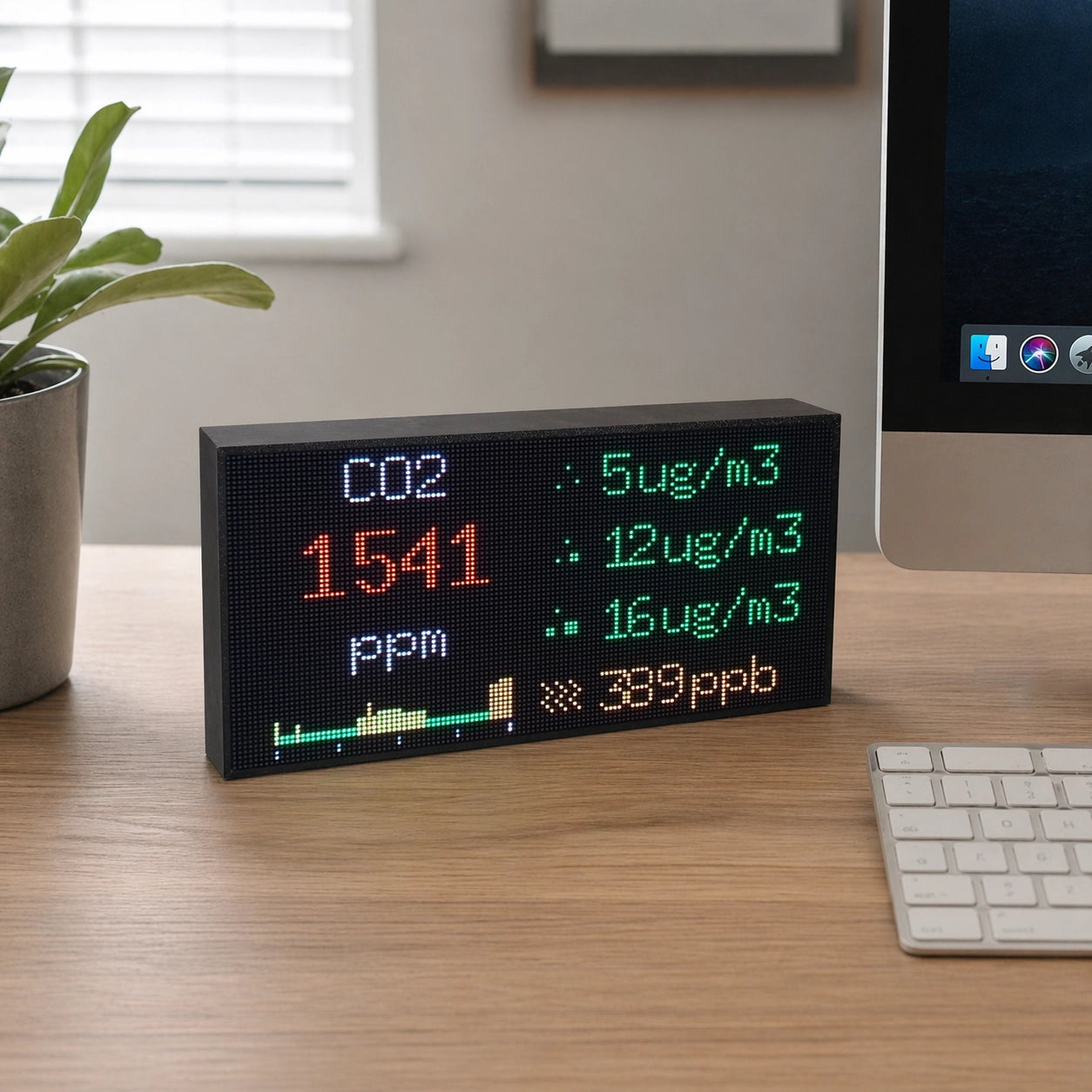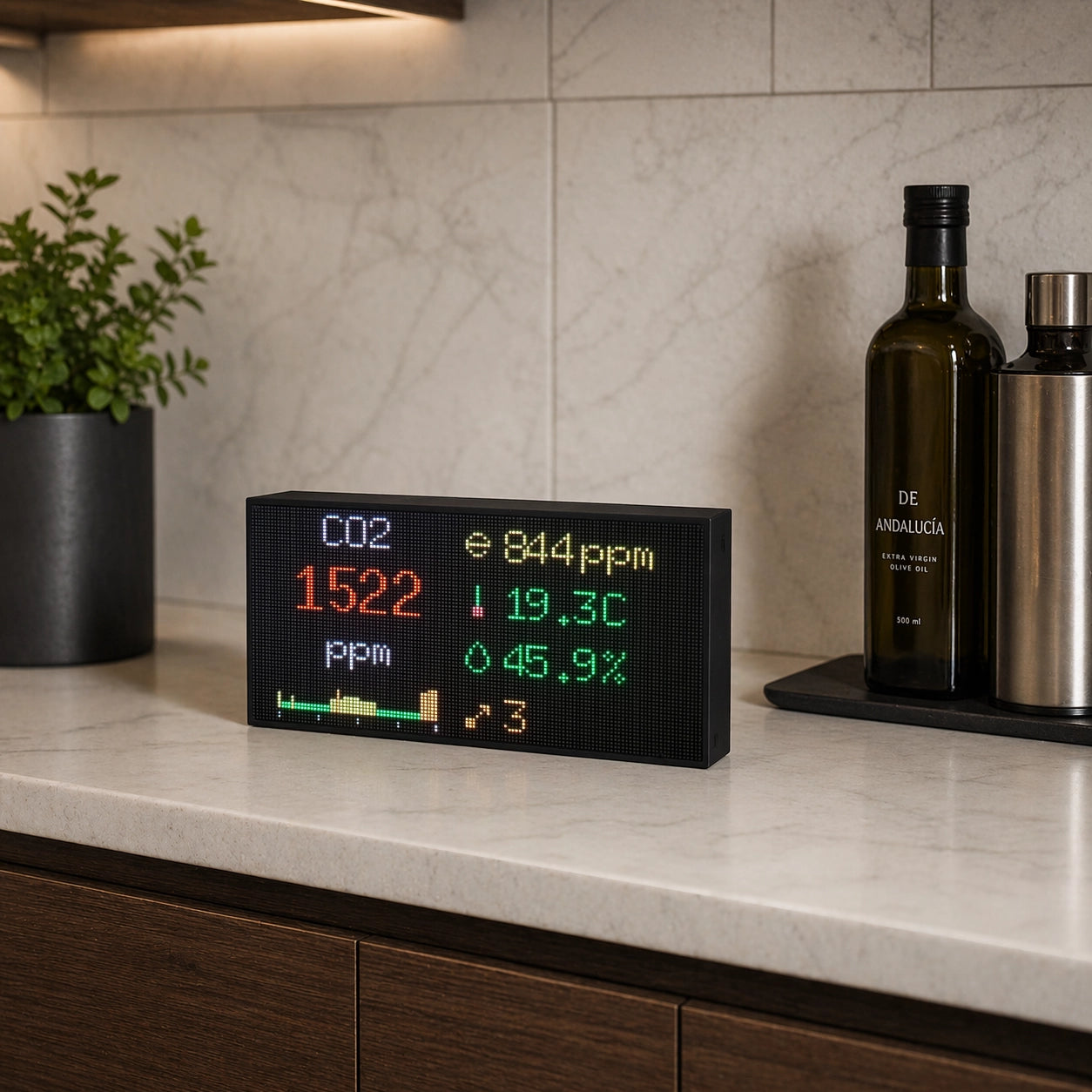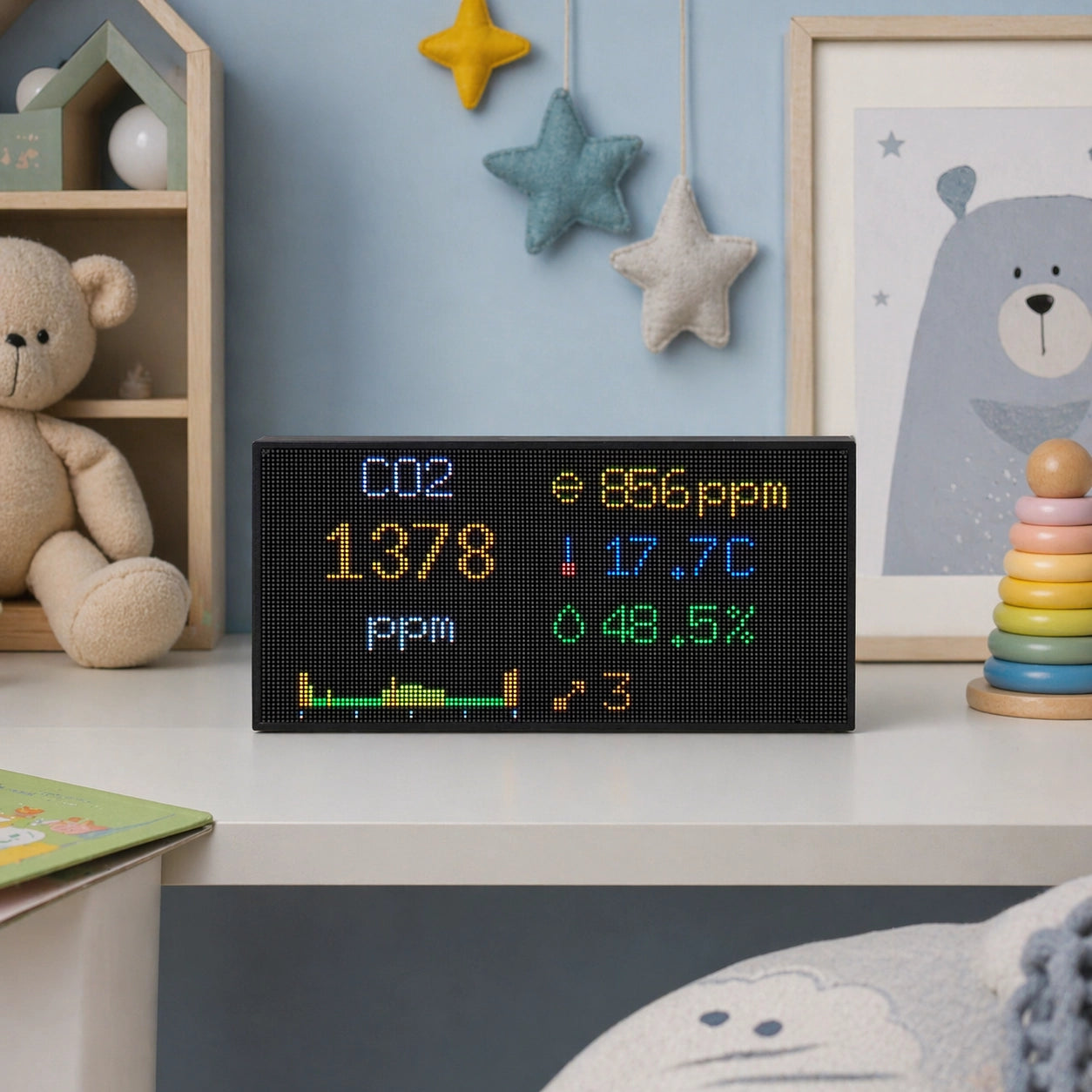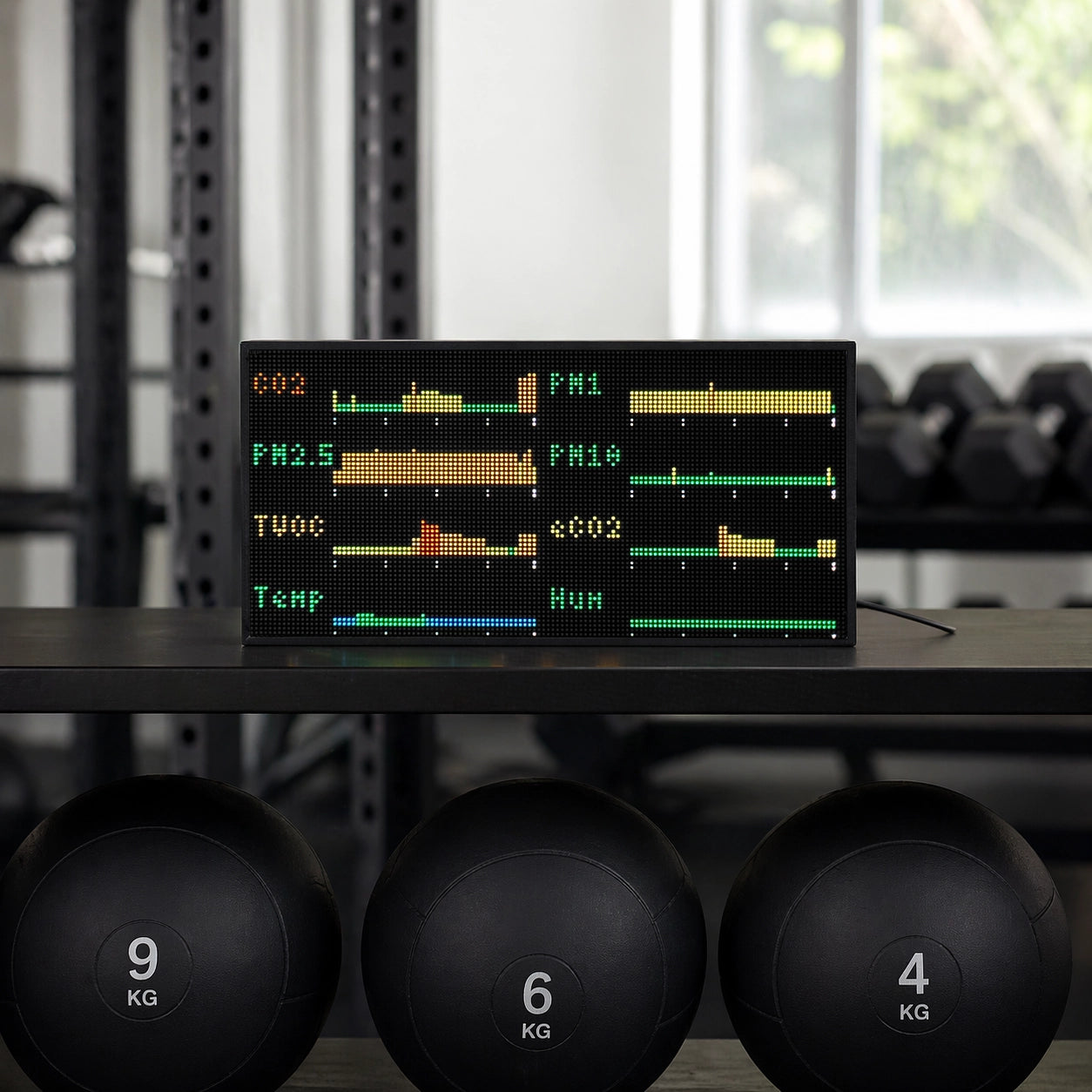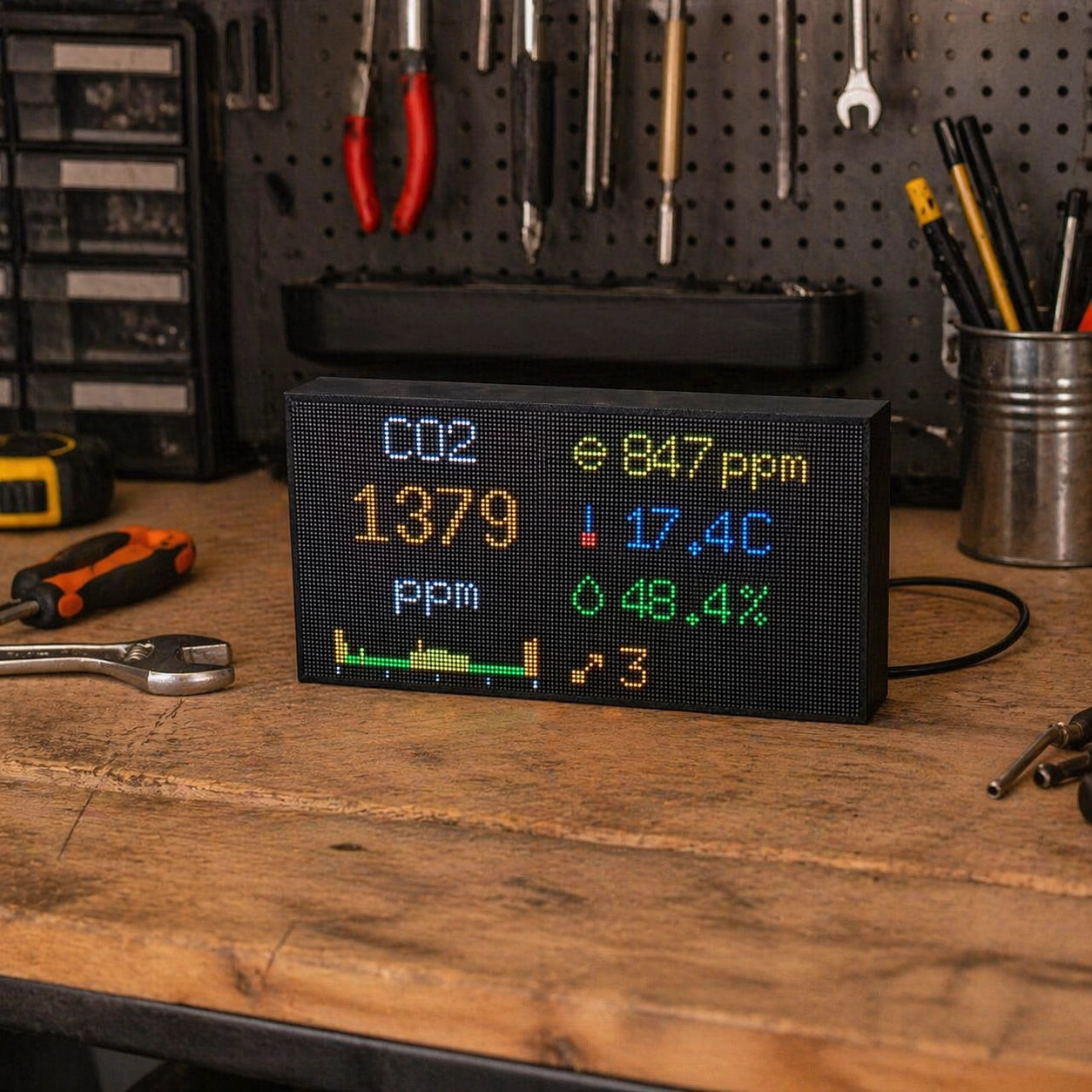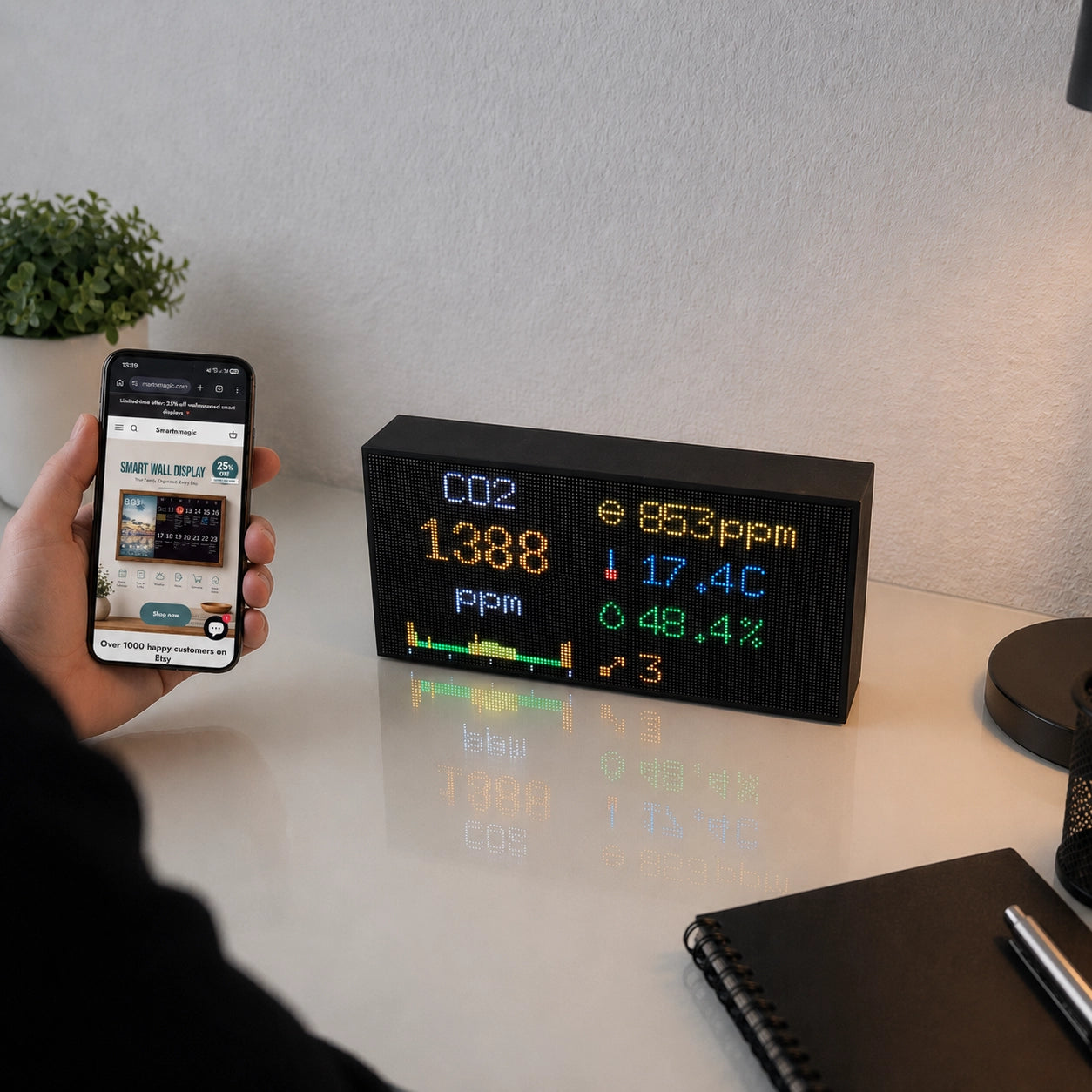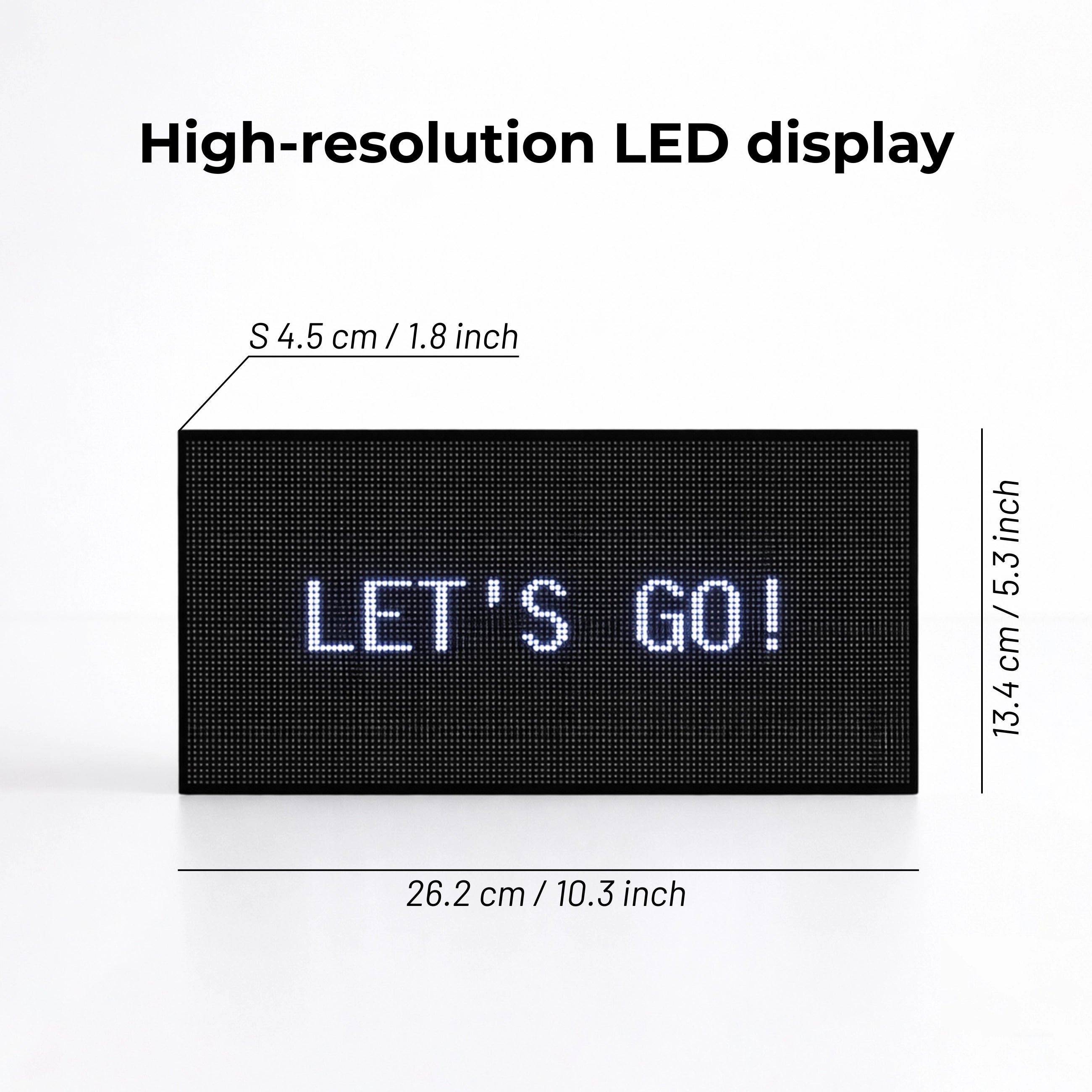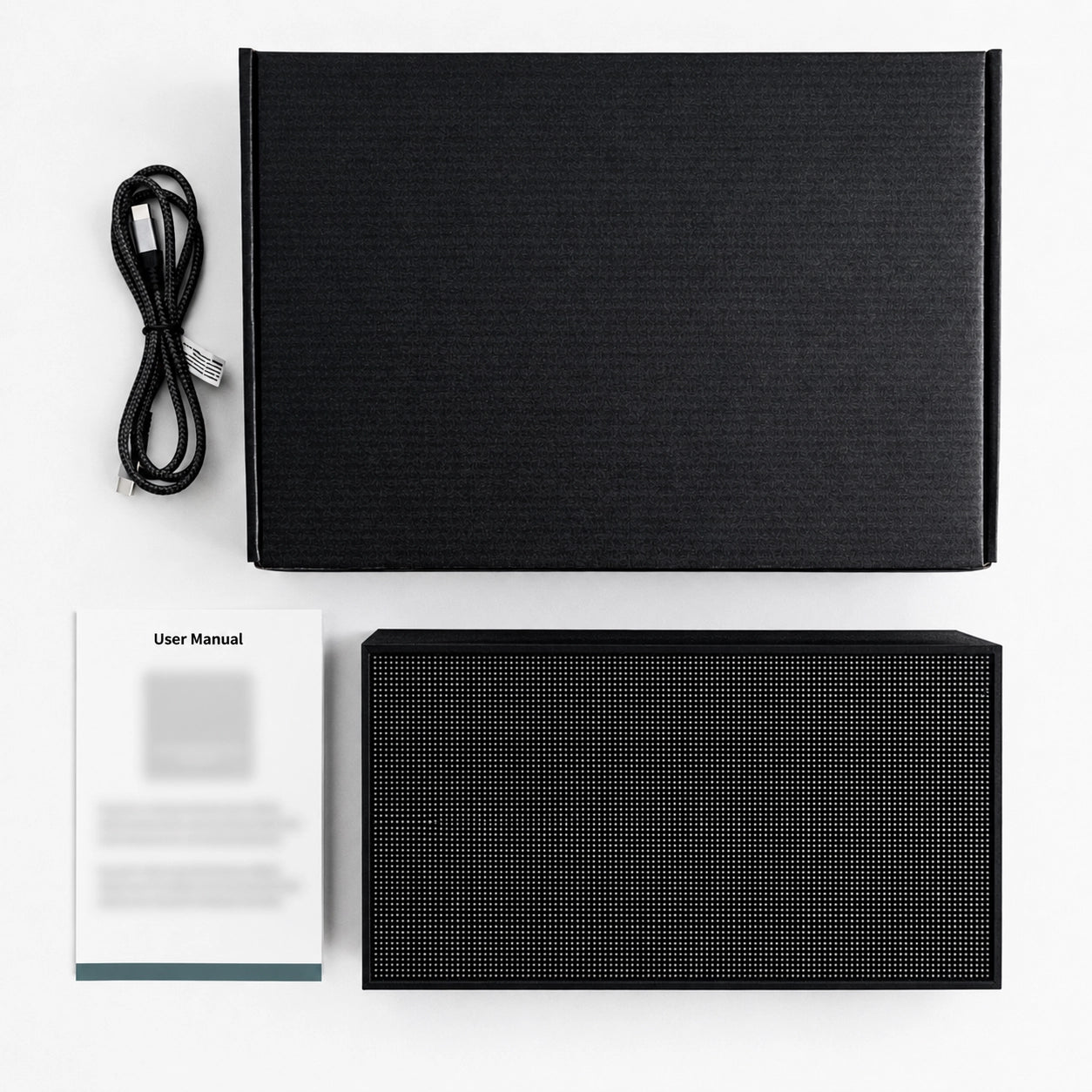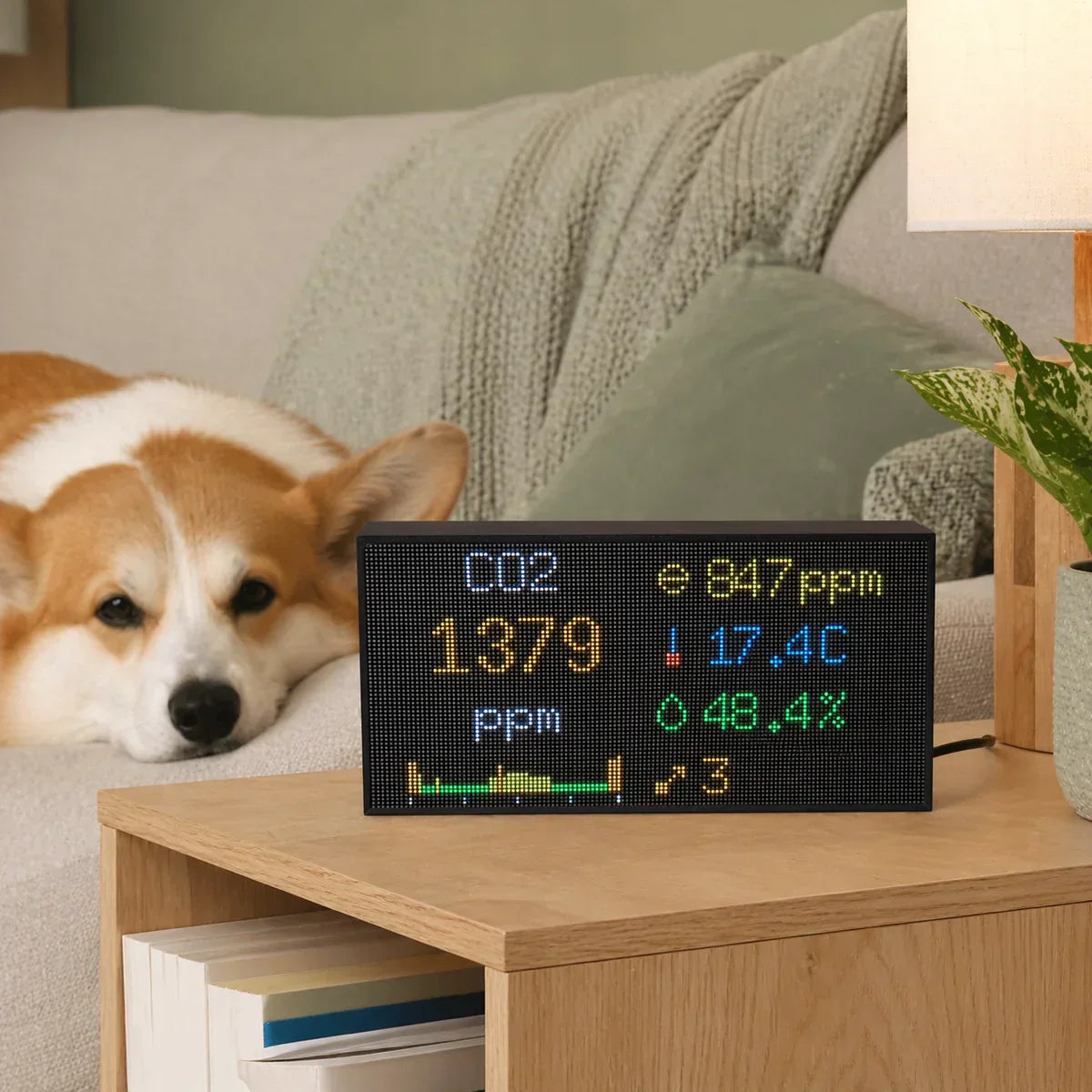
Die Raumluftqualität hat sich in den letzten zehn Jahren zu einem der meistdiskutierten Umweltthemen entwickelt. Während die Außenluftverschmutzung oft die Schlagzeilen beherrscht, verbringt die Mehrheit der Menschen den Großteil ihres Lebens in Innenräumen. Häuser, Wohnungen, Büros, Schulen und andere geschlossene Räume sind zu Umgebungen geworden, in denen Menschen schlafen, arbeiten, essen und Zeit mit ihren Familien verbringen. Trotz dieser Tatsache wissen viele Hausbesitzer erstaunlich wenig über die Qualität der Luft, die sie täglich atmen.
Ein modernes Raumluftqualitätsmessgerät kann Informationen liefern, die sonst völlig unsichtbar blieben. Luft kann sauber und frisch erscheinen, während sie erhöhte Konzentrationen von Kohlendioxid, Feinstaub, flüchtigen organischen Verbindungen oder übermäßiger Feuchtigkeit enthält. Diese Faktoren können Komfort, Schlafqualität, Konzentration, Produktivität und die langfristige Gesundheit beeinflussen. Mit zunehmendem Bewusstsein investieren immer mehr Menschen in ein Raumluftqualitätsmessgerät, um besser zu verstehen, was in ihren Häusern vor sich geht.
Der Wert eines Raumluftqualitätsmessgeräts geht weit über die Anzeige von Zahlen auf einem Bildschirm hinaus. Die besten Geräte helfen Hausbesitzern, Verschmutzungsquellen zu identifizieren, die Wirksamkeit der Lüftung zu bewerten und zu verstehen, wie tägliche Aktivitäten die Raumluftqualität beeinflussen. Ein hochwertiges Luftqualitätsmessgerät für den Heimgebrauch verwandelt die Raumluft von einer unsichtbaren Unbekannten in einen messbaren Umweltfaktor, der überwacht und verbessert werden kann.
Warum die Raumluftqualität mehr Aufmerksamkeit verdient
Die meisten Hausbesitzer gehen davon aus, dass die Raumluft sauberer ist als die Außenluft. In manchen Situationen trifft dies zu. In vielen anderen jedoch nicht.
Moderne Häuser sind darauf ausgelegt, Energieverluste zu minimieren. Verbesserte Isolierung, bessere Fenster und dichtere Gebäudehüllen reduzieren Heiz- und Kühlkosten. Diese Verbesserungen erhöhen die Energieeffizienz, reduzieren aber auch den natürlichen Austausch von Innen- und Außenluft. Schadstoffe, die im Haus entstehen, können sich daher viel länger ansammeln, als dies in älteren Gebäuden der Fall gewesen wäre.
Alltägliche Aktivitäten beeinflussen die Raumluftqualität kontinuierlich. Kochen erzeugt luftgetragene Partikel. Reinigungsmittel setzen chemische Verbindungen in die Luft frei. Möbel, Bodenbeläge, Farben, Klebstoffe und Textilien emittieren während ihrer Lebensdauer Gase. Menschliche Bewohner atmen kontinuierlich Kohlendioxid aus. Sogar einfache Aktivitäten wie Staubsaugen oder Bettenmachen können die Konzentration luftgetragener Partikel vorübergehend erhöhen.
Viele Menschen kaufen ein Raumluftqualitätsmessgerät in der Erwartung, bestätigt zu bekommen, dass ihre Raumluft bereits gesund ist. Stattdessen entdecken sie oft Verschmutzungsereignisse, die täglich auftreten und zuvor unbemerkt geblieben sind. Diese Fähigkeit, versteckte Muster aufzudecken, ist einer der wichtigsten Vorteile eines Raumluftqualitätsmessgeräts.
Wie ein Raumluftqualitätsmessgerät versteckte Raumluftverschmutzung aufdeckt
Ohne Messgeräte wird die Raumluftqualität hauptsächlich durch Wahrnehmung beurteilt. Menschen verlassen sich auf Geruch, Komfort und visuelle Beobachtungen. Leider sind diese Indikatoren oft schlechte Prädiktoren für die tatsächliche Luftqualität.
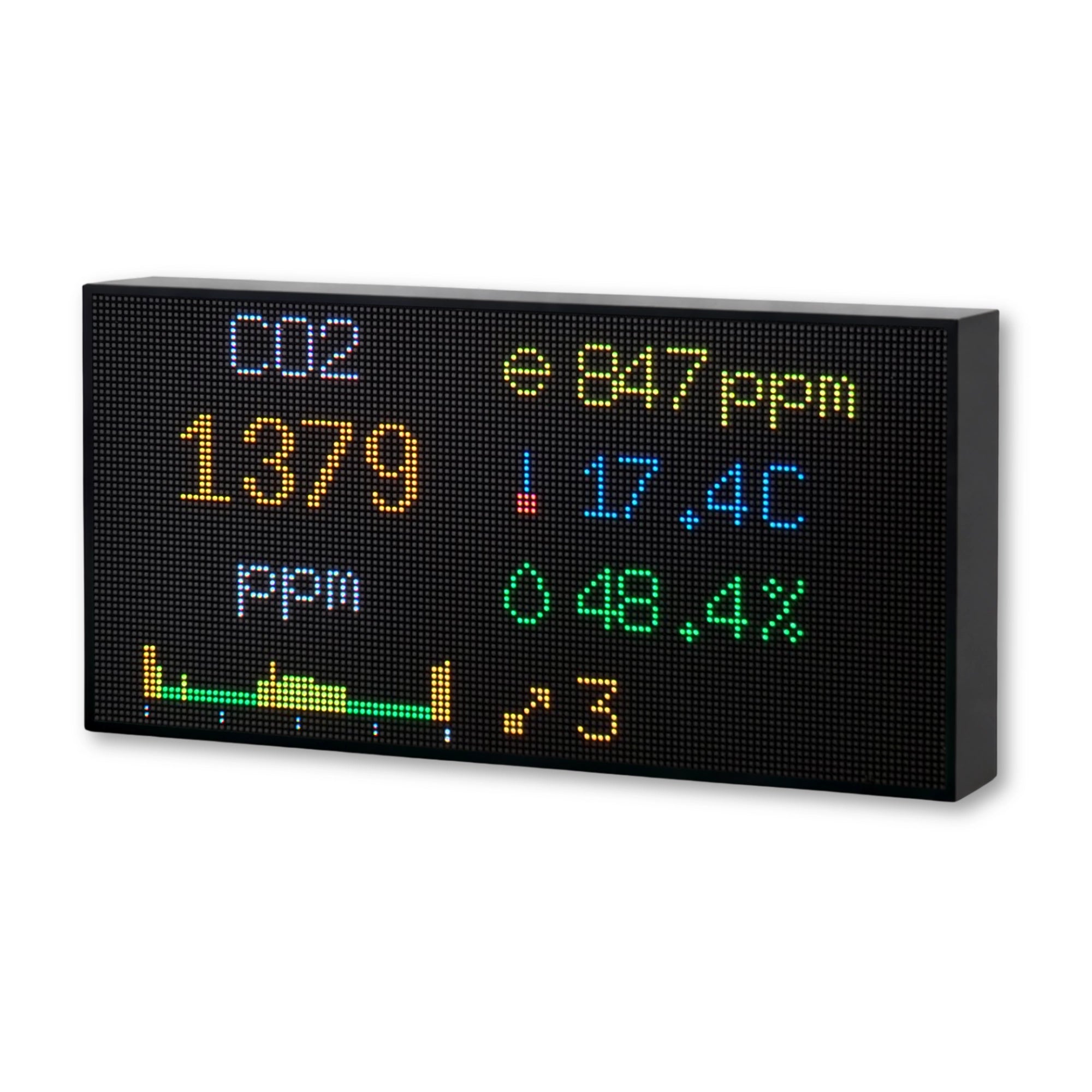
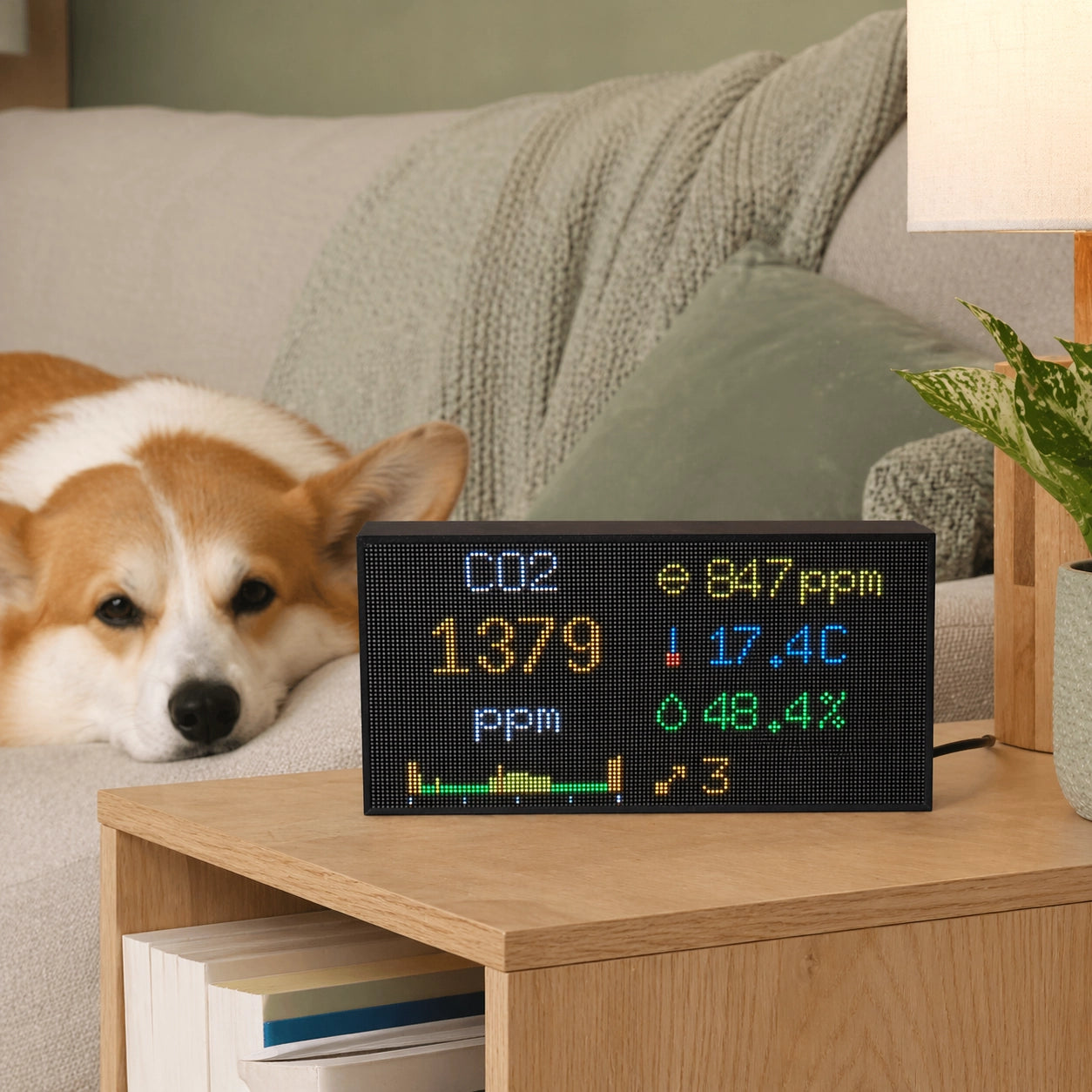
Kohlendioxid liefert ein hervorragendes Beispiel. Erhöhte CO₂-Konzentrationen haben keinen Geruch und kein sichtbares Aussehen. Ein Schlafzimmer kann sich völlig normal anfühlen, während die Kohlendioxidwerte nachts über 1500 ppm ansteigen. Viele Hausbesitzer entdecken dies erst nach der Installation eines Raumluftqualitätsmessgeräts.
Partikelverschmutzung verhält sich ähnlich. Feine Partikel, die beim Kochen entstehen, können lange in der Luft schweben, nachdem sichtbarer Rauch verschwunden ist. Ein Raumluftqualitätsmessgerät kann Verschmutzungsspitzen aufdecken, die sonst völlig unbemerkt blieben.
Dasselbe Prinzip gilt für flüchtige organische Verbindungen. Die VOC-Konzentrationen können nach dem Reinigen, Streichen, Montieren von Möbeln oder dem Öffnen einer Verpackung mit neuen Konsumgütern ansteigen. Ein hochwertiges Luftqualitätsmessgerät für den Heimgebrauch hilft, diese Ereignisse zu identifizieren und gibt Aufschluss darüber, wie lange erhöhte Konzentrationen anhalten.
Was misst ein modernes Raumluftqualitätsmessgerät?
Nicht alle Monitore messen dieselben Parameter. Dies ist eine der häufigsten Ursachen für Verwirrung bei Verbrauchern.
Einige Produkte messen nur Temperatur und Luftfeuchtigkeit. Andere enthalten Sensoren, die Partikel, Kohlendioxid, flüchtige organische Verbindungen, atmosphärischen Druck und zusätzliche Umweltparameter überwachen können. Die Nützlichkeit eines Raumluftqualitätsmessgeräts hängt stark von der Qualität der darin enthaltenen Sensoren und der Schadstoffe ab, die es messen kann.
Die informativsten Geräte überwachen typischerweise mehrere Parameter gleichzeitig, da die Raumluftqualität nicht durch eine einzelne Zahl beschrieben werden kann.
| Parameter | Warum es wichtig ist |
|---|---|
| CO₂ | Zeigt die Wirksamkeit der Lüftung an |
| PM1.0 | Misst ultrafeine luftgetragene Partikel |
| PM2.5 | Verfolgt gesundheitsrelevante Partikelverschmutzung |
| PM10 | Misst größere inhalierbare Partikel |
| TVOC | Zeigt luftgetragene chemische Verbindungen an |
| Feuchtigkeit | Beeinflusst Komfort und Schimmelwachstum |
| Temperatur | Beeinflusst Komfort und Sensorleistung |
| AQI | Vereinfacht mehrere Messungen zu einem Indikator |
Ein Raumluftqualitätsmessgerät, das diese Messungen kombiniert, liefert ein wesentlich vollständigeres Bild der Innenraumbedingungen als ein Gerät, das sich auf einen einzelnen Parameter konzentriert.
Warum PM2.5 oft wichtiger ist, als man denkt
Viele Diskussionen über Raumluftqualität konzentrieren sich stark auf Kohlendioxid. Obwohl CO₂ wichtig ist, verdient Feinstaub die gleiche Aufmerksamkeit.
PM2.5 bezieht sich auf luftgetragene Partikel mit einem Durchmesser von 2,5 Mikrometern oder weniger. Diese Partikel sind klein genug, um tief in die Lunge einzudringen. Einige Forschungen deuten darauf hin, dass die kleinsten Partikel sogar in den Blutkreislauf gelangen können.
Ein Grund, warum PM2.5 bei Verbrauchern weniger Aufmerksamkeit erhält, ist, dass die Partikelverschmutzung oft episodisch ist. Konzentrationen können für kurze Zeit dramatisch ansteigen und dann wieder normal werden. Ohne ein Raumluftqualitätsmessgerät bleiben diese Ereignisse typischerweise unbemerkt.
Kochen ist eine der häufigsten Quellen für Partikelverschmutzung in Innenräumen. Das Braten von Speisen kann PM2.5-Konzentrationen erzeugen, die um ein Vielfaches höher sind als die Hintergrundwerte. Kerzen, Kamine, Räucherstäbchen und einige 3D-Druckverfahren können ähnliche Effekte hervorrufen.
Typische PM2.5-Quellen in Haushalten
| Quelle | Relativer Einfluss |
|---|---|
| Braten von Speisen | Sehr hoch |
| Gaskochen | Hoch |
| Kerzen | Hoch |
| Kamine | Sehr hoch |
| Staubsaugen | Mäßig |
| Verkehrsverschmutzung von außen | Mäßig bis hoch |
| Einige 3D-Drucker | Variabel |
Viele Hausbesitzer sind überrascht festzustellen, dass die größten Verschmutzungsereignisse in ihren Häusern von gewöhnlichen täglichen Aktivitäten und nicht von externen Quellen stammen.
Warum verschiedene Monitore unterschiedliche Ergebnisse liefern
Verbraucher vergleichen häufig zwei Monitore und stellen fest, dass die Messwerte nicht übereinstimmen. Dies führt oft zu Fragen bezüglich Genauigkeit und Zuverlässigkeit.
Tatsächlich verwenden nicht alle Monitore dieselben Technologien.
Die Kohlendioxidmessung liefert eines der klarsten Beispiele. Premium-Geräte verwenden typischerweise die NDIR-Technologie, die Kohlendioxid durch Infrarotlichtabsorption direkt misst. Diese Methode wird aufgrund ihrer Zuverlässigkeit und Wiederholbarkeit seit Jahrzehnten in industriellen und wissenschaftlichen Anwendungen eingesetzt.
Viele preiswerte Geräte zeigen geschätzte Kohlendioxidwerte an, die aus VOC-Messungen abgeleitet werden. Diese Schätzungen werden üblicherweise als eCO₂ bezeichnet. Obwohl die angezeigten Einheiten identisch erscheinen mögen, sind die Messmethoden grundlegend unterschiedlich.
Vergleich von CO₂-Messtechnologien
| Technologie | Direkte Messung | Typische Genauigkeit |
|---|---|---|
| NDIR CO₂-Sensor | Ja | Hoch |
| eCO₂-Schätzung | Nein | Variabel |
Ein Hausbesitzer, der zwei Geräte vergleicht, kann daher erheblich unterschiedliche Messwerte sehen, selbst wenn beide Produkte genau wie vorgesehen funktionieren.
Dasselbe Prinzip gilt für Partikelsensoren. Hochwertige laserbasierte Sensoren liefern im Allgemeinen zuverlässigere Messungen als vereinfachte optische Systeme. Der Unterschied wird bei sich schnell ändernden Luftqualitätsbedingungen zunehmend deutlicher.
Warum Sensorhersteller wichtiger sind, als die meisten Käufer erkennen
Einer der am wenigsten diskutierten Aspekte der Raumluftüberwachung ist die Herkunft der Sensoren selbst. Verbraucher vergleichen Produkte oft anhand von Bildschirmgröße, Smartphone-Anwendungen, Industriedesign oder Abonnementfunktionen. Obwohl diese Faktoren den Komfort beeinflussen können, sagen sie sehr wenig über die Qualität der Messungen aus.
Ein Raumluftqualitätsmessgerät ist nur so gut wie die Sensoren in seinem Inneren.
Die Sensorindustrie ist hochspezialisiert. Die Entwicklung genauer Umweltsensoren erfordert Expertise in Optik, Chemie, Materialwissenschaft, Elektronik, Fertigung und Kalibrierung. Unternehmen wie Sensirion, ScioSense, Honeywell, Bosch und Vaisala haben Jahrzehnte damit verbracht, Sensortechnologien für industrielle, wissenschaftliche und kommerzielle Anwendungen zu verfeinern.
Der Unterschied wird besonders wichtig, wenn die Langzeitgenauigkeit berücksichtigt wird. Viele preiswerte Sensoren funktionieren bei ersten Tests recht gut. Probleme treten oft Monate oder Jahre später auf. Umweltkontamination, Temperaturschwankungen, Feuchtigkeitsexposition und natürliche Komponentenalterung können die Messgenauigkeit allmählich beeinflussen.
Premium-Sensorhersteller investieren stark in Kompensationsalgorithmen, die diese Effekte adressieren sollen. Moderne Sensoren verfügen häufig über eingebaute Temperaturkompensation, Feuchtigkeitskompensation, Signalfilterung und Selbstkalibrierungsmechanismen. Diese Funktionen erscheinen selten in Marketingmaterialien, da sie für Verbraucher schwer zu erklären sind. Dennoch bestimmen sie oft, ob ein Monitor nach Jahren des Dauerbetriebs vertrauenswürdig bleibt.
Dies ist ein Grund, warum zwei extern ähnlich erscheinende Geräte merklich unterschiedliche Ergebnisse liefern können. Ein Raumluftqualitätsmessgerät kann industrielle Sensorbauteile mit umfangreichen Kalibrier- und Kompensationssystemen enthalten. Ein anderes kann auf kostengünstigere Sensoren setzen, die hauptsächlich für Consumer-Elektronik-Anwendungen entwickelt wurden.
Der Unterschied ist aus den Produktspezifikationen nicht immer ersichtlich. Viele Hersteller geben wenig Informationen zur Sensorherkunft oder Messmethodik an. Käufer, die an genauen Langzeitmessungen interessiert sind, sollten daher genau auf die Sensortechnologie achten, anstatt sich ausschließlich auf Displayfunktionen oder mobile Anwendungen zu konzentrieren.
Unter professionellen Sensorherstellern gilt Sensirion oft als einer der Industriestandards für Umweltsensorik. Das in der Schweiz gegründete Unternehmen hat sich einen starken Ruf in den Bereichen Temperatur-, Feuchtigkeits-, Feinstaub- und Kohlendioxid-Messtechnologien erarbeitet. Sensirion-Sensoren werden nicht nur in Verbraucher-Luftqualitätsmonitoren, sondern auch in medizinischen Geräten, HLK-Systemen, Laborgeräten und industriellen Überwachungslösungen weit verbreitet eingesetzt. Ihre SCD4x-Serie von CO₂-Sensoren und SEN5x-Umweltsensormodule gelten häufig als einige der fortschrittlichsten integrierten Sensorlösungen, die für Anwendungen zur Raumluftqualität erhältlich sind. Ein Grund, warum viele Hersteller Sensirion-Komponenten wählen, ist der starke Fokus des Unternehmens auf Werkskalibrierung, Langzeitstabilität und Kompensationsalgorithmen, die Temperatur- und Feuchtigkeitseffekte berücksichtigen.
ScioSense mit Hauptsitz in den Niederlanden hat sich zu einem weiteren wichtigen Namen in der Raumluftqualitätsbranche entwickelt. Das Unternehmen entstand aus den Umweltsensorikaktivitäten von AMS und erbte Technologien, die seit vielen Jahren in Luftqualitätsprodukten weit verbreitet sind. ScioSense ist besonders bekannt für seine Gassensorlösungen und integrierten Luftqualitätssensorplattformen. Produkte wie der ENS160 und ENS210 sind bei Entwicklern von Smart-Home-Geräten und Umweltüberwachungssystemen beliebt geworden. Der APC1-Partikelsensor des Unternehmens hat auch Aufmerksamkeit erlangt, da er kompakte Größe mit laserbasierter Partikelmesstechnik kombiniert. ScioSense legt großen Wert auf Umweltintelligenz und Sensorfusion, wodurch mehrere Sensortechnologien zusammenarbeiten können, um ein vollständigeres Bild der Innenraumbedingungen zu liefern.
Honeywell repräsentiert eine andere Kategorie von Herstellern. Im Gegensatz zu Unternehmen, die sich hauptsächlich auf Umweltsensorik konzentrieren, ist Honeywell in zahlreichen Industriesektoren tätig, darunter Luft- und Raumfahrt, Gebäudeautomation, industrielle Steuerungssysteme und Sicherheitsausrüstung. Dieser breite industrielle Hintergrund hat das Sensorportfolio des Unternehmens beeinflusst. Honeywell-Umweltsensoren werden oft für Anwendungen ausgewählt, bei denen Zuverlässigkeit und Langzeitbetrieb entscheidend sind. Viele Gebäudemanagementsysteme, kommerzielle HLK-Installationen und industrielle Überwachungsplattformen verlassen sich aufgrund ihres etablierten Rufs in anspruchsvollen Umgebungen auf Honeywell-Sensortechnologien.
Bosch Sensortec ist ein weiterer Hersteller, der häufig in modernen Luftqualitätsprodukten anzutreffen ist. Während Bosch vielleicht am besten für Automobil- und Industrietechnologien bekannt ist, hat sich seine Sensorabteilung zu einem wichtigen Lieferanten von Umweltsensoren entwickelt, die in Unterhaltungselektronik und Smart-Home-Produkten verwendet werden. Bosch-Sensoren sind besonders häufig in Geräten zu finden, die Temperatur, Luftfeuchtigkeit, Druck und flüchtige organische Verbindungen überwachen. Ihre Sensoren BME680 und BME688 wurden von Entwicklern, die kompakte Umweltüberwachungslösungen entwickeln, weit verbreitet eingesetzt. Boschs Stärke liegt in der Kombination mehrerer Sensorfunktionen innerhalb hochintegrierter, stromsparender Geräte, die für den großflächigen Einsatz geeignet sind.
Für Verbraucher, die ein Raumluftqualitätsmessgerät bewerten, liefert der Sensorhersteller oft wertvolle Einblicke in die erwartete Qualität der Messungen. Während das Gesamtdesign des Monitors, die Kalibrierungsverfahren, das Luftstrommanagement und die Softwarealgorithmen von entscheidender Bedeutung bleiben, profitieren Geräte, die auf Sensortechnologien von Unternehmen wie Sensirion, ScioSense, Honeywell, Bosch und Vaisala basieren, im Allgemeinen von jahrzehntelanger Forschung und Entwicklung in der Umweltmesstechnik. Das Verständnis, welche Sensoren in einem Monitor verwendet werden, kann daher viel mehr über seine potenzielle Genauigkeit verraten als allein Marketingaussagen.
Die vielleicht wichtigste Empfehlung für jeden, der ein Raumluftqualitätsmessgerät kaufen möchte, ist überraschend einfach: Wählen Sie einen Monitor, dessen Sensorkomponenten vom Hersteller klar identifiziert werden.
Unsere Luftqualitätsmonitore basieren auf professionellen Sensortechnologien von Sensirion SCD41 und ScioSense APC1. Dies ist ein wichtiger Unterschied, da die Genauigkeit eines Raumluftqualitätsmessgeräts nicht nur vom Display, der Software oder dem Gehäuse abhängt, sondern in erster Linie von der Qualität der im Gerät verwendeten Sensoren.

Die Bedeutung der Kalibrierung
Kalibrierung ist eines der am meisten missverstandenen Konzepte in der Raumluftüberwachung.
Viele Menschen gehen davon aus, dass ein Sensor entweder richtig funktioniert oder nicht. Die Realität ist nuancierter. Die meisten Umweltsensoren erfahren im Laufe der Zeit eine gewisse Drift. Die Herausforderung für Hersteller besteht darin, diese Drift zu minimieren und sie wann immer möglich zu kompensieren.
Kohlendioxidsensoren bieten ein nützliches Beispiel. Hochwertige NDIR-Sensoren enthalten oft automatische Basislinienkorrektur-Algorithmen. Diese Systeme analysieren langfristige Messtrends und passen die Kalibrierungsparameter periodisch an die erwarteten Umgebungsbedingungen an.
Partikelsensoren stehen vor anderen Herausforderungen. Staubansammlungen in der optischen Kammer können die Messgenauigkeit allmählich beeinflussen. High-End-Sensorhersteller entwickeln optische Systeme speziell, um Kontaminationseffekte zu reduzieren und über längere Zeiträume eine stabile Leistung aufrechtzuerhalten.
VOC-Sensoren stellen vielleicht die größte Kalibrierungsherausforderung dar. Flüchtige organische Verbindungen stellen eine große Familie von Chemikalien mit sehr unterschiedlichen Eigenschaften dar. Infolgedessen sollten VOC-Messungen im Allgemeinen als Trendindikatoren und nicht als präzise Laborkonzentrationsmessungen betrachtet werden.
Ein hochwertiger Luftqualitätsmonitor für den Heimgebrauch sollte konsistente und wiederholbare Messungen liefern. Langzeitstabilität ist oft wichtiger als das Erreichen perfekter Laborgenauigkeit unter idealen Bedingungen.
Kohlendioxid über einfache Zahlen hinaus verstehen
Kohlendioxid wird häufig im Zusammenhang mit Belüftung diskutiert, doch viele Hausbesitzer verstehen nicht vollständig, warum es wichtig ist.
CO₂ selbst ist in den in Haushalten vorkommenden Konzentrationen typischerweise nicht die direkte Ursache schwerwiegender gesundheitlicher Auswirkungen. Stattdessen dient es als wertvoller Indikator für die Wirksamkeit der Belüftung. Steigende Kohlendioxidwerte zeigen im Allgemeinen an, dass sich ausgeatmete Luft schneller ansammelt, als frische Luft in den Raum gelangt.
Diese Beziehung macht CO₂ zu einer der nützlichsten Messgrößen, die ein Luftqualitätsmonitor für zu Hause liefern kann.
Die folgende Tabelle veranschaulicht gängige CO₂-Konzentrationen in Innenräumen.
| CO₂-Wert | Typische Interpretation |
|---|---|
| 400–600 ppm | Ausgezeichnete Belüftung |
| 600–800 ppm | Gute Belüftung |
| 800–1000 ppm | Akzeptabel |
| 1000–1500 ppm | Belüftung möglicherweise unzureichend |
| 1500–2500 ppm | Schlechte Belüftung |
| Über 2500 ppm | Erhebliche Bedenken bezüglich der Belüftung |
Viele Menschen gehen davon aus, dass die Belüftung ausreichend sein muss, nur weil sich ein Raum angenehm anfühlt. Eine kontinuierliche Überwachung zeigt oft eine andere Realität. In Schlafzimmern treten häufig die höchsten Kohlenstoffdioxidwerte über Nacht auf, da Türen und Fenster geschlossen bleiben, während die Bewohner viele Stunden lang weiteratmen.
Ein Luftqualitätsmonitor für zu Hause kann diese Muster sofort aufdecken. In vielen Fällen führen relativ einfache Anpassungen der Belüftung zu messbaren Verbesserungen.
Typischer CO₂-Trend über Nacht
CO₂ (ppm)

2500 |                           *
2200 |                        ****
1900 |                     ********
1600 |                  ***********
1300 |              ***************
1000 |          *******************
 700 |      ***********************
 400 |*****************************
      22:00                 07:00
Viele Hausbesitzer sind überrascht, wenn sie diese Grafik zum ersten Mal sehen. Das Zimmer mag die ganze Nacht über völlig normal erschienen sein, während sich die Luftqualität dramatisch verändert hat.
Häufige Mythen über die Luftqualität in Innenräumen
Die Luftqualität in Innenräumen ist immer noch von Missverständnissen umgeben, die Hausbesitzer oft zu falschen Schlussfolgerungen führen.
Einer der häufigsten Mythen ist, dass schlechte Luft immer schlecht riecht. In Wirklichkeit haben viele wichtige Schadstoffe wenig oder keinen Geruch. Kohlenstoffdioxid kann nicht durch Geruch wahrgenommen werden. Feinstaub bleibt oft unsichtbar. Erhöhte Konzentrationen können vorhanden sein, auch wenn ein Raum völlig normal erscheint.
Ein weiteres weit verbreitetes Missverständnis ist, dass Luftreiniger jedes Problem mit der Luftqualität in Innenräumen lösen. Luftreiniger können bei der Reduzierung von Feinstaub äußerst effektiv sein. Sie entfernen jedoch im Allgemeinen kein Kohlenstoffdioxid. Ein Schlafzimmer, das mit einem teuren Luftreiniger ausgestattet ist, kann immer noch unter schlechter Belüftung und erhöhten CO₂-Werten über Nacht leiden.
Viele Hausbesitzer gehen auch davon aus, dass das Öffnen eines Fensters immer die Luftqualität verbessert. In den meisten Situationen trifft dies zu. Es kommt jedoch auf die lokalen Bedingungen an. Häuser in der Nähe von stark befahrenen Straßen, Industrieanlagen, Baustellen oder Waldbrandrauch können gelegentlich schlechtere Außenluft als Innenluft aufweisen.
Hier wird ein Luftqualitätsmonitor für zu Hause besonders wertvoll. Anstatt sich auf Annahmen zu verlassen, können Hausbesitzer Entscheidungen auf der Grundlage tatsächlicher Messungen treffen.
Wo sollte ein Luftqualitätsmonitor für zu Hause platziert werden?
Die Platzierung des Sensors kann die Messqualität erheblich beeinflussen.
Ein Luftqualitätsmonitor für zu Hause sollte im Allgemeinen in Atemhöhe an einem Ort platziert werden, der normale Lebensbedingungen widerspiegelt. Das Platzieren eines Monitors direkt neben einem Fenster, Heizkörper, Luftreiniger, Lüftungsauslass oder Kochgerät kann zu irreführenden Messwerten führen, die die Bedingungen im Raum nicht genau widerspiegeln.
Wohnzimmer, Heimbüros und Schlafzimmer sind oft die nützlichsten Überwachungsorte, da sich die Bewohner in diesen Bereichen viel aufhalten.
Einige Hausbesitzer entscheiden sich dafür, einen einzelnen Monitor für mehrere Tage zwischen den Räumen zu wechseln. Dieser Ansatz kann überraschende Unterschiede zwischen den Standorten aufzeigen. Schlafzimmer weisen häufig die höchsten Kohlenstoffdioxidkonzentrationen auf, während Küchen oft die größten Feinstaubspitzen erleben.
Ein hochwertiger Luftqualitätsmonitor für zu Hause wird deutlich wertvoller, wenn Messungen an Orten durchgeführt werden, die die tägliche Exposition genau widerspiegeln.
Was die besten Luftqualitätsmonitore für zu Hause gemeinsam haben
Der beste Luftqualitätsmonitor für zu Hause ist nicht unbedingt das teuerste Modell auf dem Markt. Es ist auch nicht unbedingt das Gerät mit dem größten Display oder der ausgeklügeltsten Smartphone-Anwendung.
Die nützlichsten Monitore weisen mehrere gemeinsame Merkmale auf. Sie verwenden bewährte Sensortechnologien. Sie liefern transparente Informationen darüber, was tatsächlich gemessen wird. Sie behalten über die Zeit eine stabile Leistung bei. Sie helfen den Benutzern, Trends zu verstehen, anstatt nur isolierte Zahlen anzuzeigen.
Ein hochwertiger Luftqualitätsmonitor für den Heimgebrauch sollte bessere Entscheidungen fördern. Das Ziel ist nicht nur, Daten zu sammeln. Das Ziel ist, zu verstehen, wie sich die Bedingungen in Innenräumen über den Tag ändern, und Verbesserungsmöglichkeiten zu identifizieren.
Viele Hausbesitzer entdecken, dass relativ einfache Maßnahmen erhebliche Vorteile bringen. Eine verbesserte Belüftung während des Schlafs, bessere Küchenabzugspraktiken, ein geringerer Einsatz von duftenden Produkten und effektivere Filtrationsstrategien können die Luftqualität in Innenräumen erheblich beeinflussen.
Der größte Wert eines Luftqualitätsmonitors für zu Hause liegt in seiner Fähigkeit, diese Möglichkeiten aufzuzeigen. Sobald die Innenraumluft messbar wird, wird sie auch kontrollierbar.
Das verborgene Problem von VOCs in modernen Häusern
Flüchtige organische Verbindungen gehören zu den am wenigsten verstandenen Innenraumschadstoffen.
VOCs stammen aus Tausenden von gängigen Produkten. Möbel, Bodenbeläge, Farben, Klebstoffe, Reinigungsmittel, Kosmetika und Lufterfrischer können alle zu den VOC-Werten in Innenräumen beitragen. Neu gebaute und kürzlich renovierte Häuser weisen oft erhöhte VOC-Konzentrationen auf, da viele Baumaterialien auch lange nach der Installation weiterhin Verbindungen freisetzen.
Eine der überraschenderen Erkenntnisse, die ein Luftqualitätsmonitor für zu Hause enthüllt, ist, dass angenehme Gerüche nicht unbedingt auf saubere Luft hinweisen. In einigen Situationen kann das Gegenteil der Fall sein. Produkte, die speziell zur Erzeugung von Düften entwickelt wurden, können die VOC-Konzentrationen erheblich erhöhen.
Ein hochwertiger Luftqualitätsmonitor für zu Hause kann VOC-Spitzen nach der Reinigung, dem Streichen oder der Einführung neuer Materialien in das Haus identifizieren. Diese Informationen helfen Hausbesitzern, die Belüftung zu verbessern und die Exposition während Perioden erhöhter Konzentrationen zu reduzieren.
Abschließende Gedanken
Die Luftqualität in Innenräumen beeinflusst praktisch jeden Aspekt des täglichen Lebens, doch sie bleibt einer der am wenigsten sichtbaren Umweltfaktoren im Haus. Die meisten Menschen verbringen Jahre damit, in Gebäuden zu leben, ohne ein objektives Verständnis der Luft, die sie atmen, zu haben.
Ein moderner Luftqualitätsmonitor für zu Hause ändert das. Durch die kontinuierliche Bereitstellung von Informationen über Kohlenstoffdioxid, Feinstaub, VOCs, Feuchtigkeit und andere Umweltparameter ermöglicht er Hausbesitzern zu verstehen, wie ihre Häuser tatsächlich funktionieren.
Der effektivste Luftqualitätsmonitor für Heimanwendungen kombiniert zuverlässige Sensoren, durchdachte Technik, langfristige Stabilität und eine aussagekräftige Datenpräsentation. Ob das Ziel darin besteht, die Schlafqualität zu verbessern, luftgetragene Partikel zu reduzieren, die Wirksamkeit der Belüftung zu bewerten oder tiefere Einblicke in die Umgebungsbedingungen in Innenräumen zu gewinnen, ein hochwertiger Luftqualitätsmonitor für zu Hause liefert Informationen, die allein durch Beobachtung nicht gewonnen werden können.
Mit zunehmendem Bewusstsein für die Umweltgesundheit in Innenräumen wird die Überwachung der Luftqualität in Innenräumen wahrscheinlich zu einem Standardmerkmal moderner Häuser werden. Hausbesitzer, die heute mit der Messung beginnen, entdecken oft etwas Überraschendes: viele der wichtigsten Aspekte der Luftqualität sind völlig unsichtbar, bis ein Monitor sie sichtbar macht.