For years, the smart home industry promised disappearance.
Lights would automate themselves. Heating systems would optimize energy consumption in the background. Sensors would feed invisible AI algorithms. Voice assistants are aiming to remove the need for screens almost entirely. The “best” interface, the industry repeatedly claimed in 2026, was no interface at all.
And for a while, that vision sounded convincing. Until people actually started living inside highly automated homes. Because something unexpected happened once homes became intelligent enough to generate meaningful amounts of data. People wanted to see what their homes were doing and not occasionally or through buried three menus deep inside an app. Even not after opening a phone which is already overloaded with notifications, messages, meetings, and various alerts...but continuously.
The modern smart home is no longer just a collection of connected gadgets. Increasingly, it behaves like a real-time operating environment:
- energy systems react dynamically to pricing,
- HVAC zones adapt to occupancy,
- air quality sensors track particulate matter,
- cameras generate AI-assisted events,
- solar production changes appliance behavior,
- EV chargers negotiate charging windows overnight,
- leak detectors monitor infrastructure continuously.
And all of that information has to live somewhere physically visible. That is the problem the smart home industry still has not fully solved. Especially inside the rapidly growing ecosystem surrounding Home Assistant.
Home Assistant Accidentally Became an Operating System
Home Assistant was never supposed to become this large.
Originally, it was mostly an enthusiast platform:
- YAML files,
- Raspberry Pi boards,
- MQTT brokers,
- Zigbee coordinators,
- dashboards assembled late at night by people who enjoyed debugging serial logs.
But over the past several years, something changed. The platform matured as never before, its ecosystem exploded and smart homes themselves became dramatically more complex.
Today, Home Assistant installations routinely integrate:
- solar systems,
- battery storage,
- KNX infrastructure,
- Matter devices,
- HVAC systems,
- security cameras,
- indoor air quality monitoring,
- dynamic electricity pricing,
- EV charging,
- irrigation systems,
- voice assistants,
- AI-generated automations,
- industrial telemetry.
Some residential Home Assisstant dashboards now resemble lightweight SCADA systems more than consumer electronics interfaces.
And that shift exposed an uncomfortable truth: the smartphone is often a terrible interface for persistent home awareness.
The Smartphone Problem
For the past decade, nearly every smart home company assumed the phone would become the universal smart home controller. Technically, that works but sychologically, it often fails.
Phones are interruption machines. Every interaction competes against various attention thieves. That environment is fundamentally different from ambient household awareness.
A wall clock works because it remains visible.
A thermostat works because it occupies physical space.
A kitchen whiteboard works because people pass by it repeatedly throughout the day.
Smartphones remove information from the environment. Which means even highly sophisticated smart homes often become operationally invisible.
Many Home Assistant users eventually experience the same strange phenomenon:
they build incredibly advanced systems…and then barely look at them.
Not because the dashboards are bad. But because the interface lives in the wrong place.
Why Home Assisstant Displays Panels Started Appearing
The market recognized this problem years ago. That is why wall-mounted smart home displays started appearing almost immediately after Home Assistant dashboards became popular.
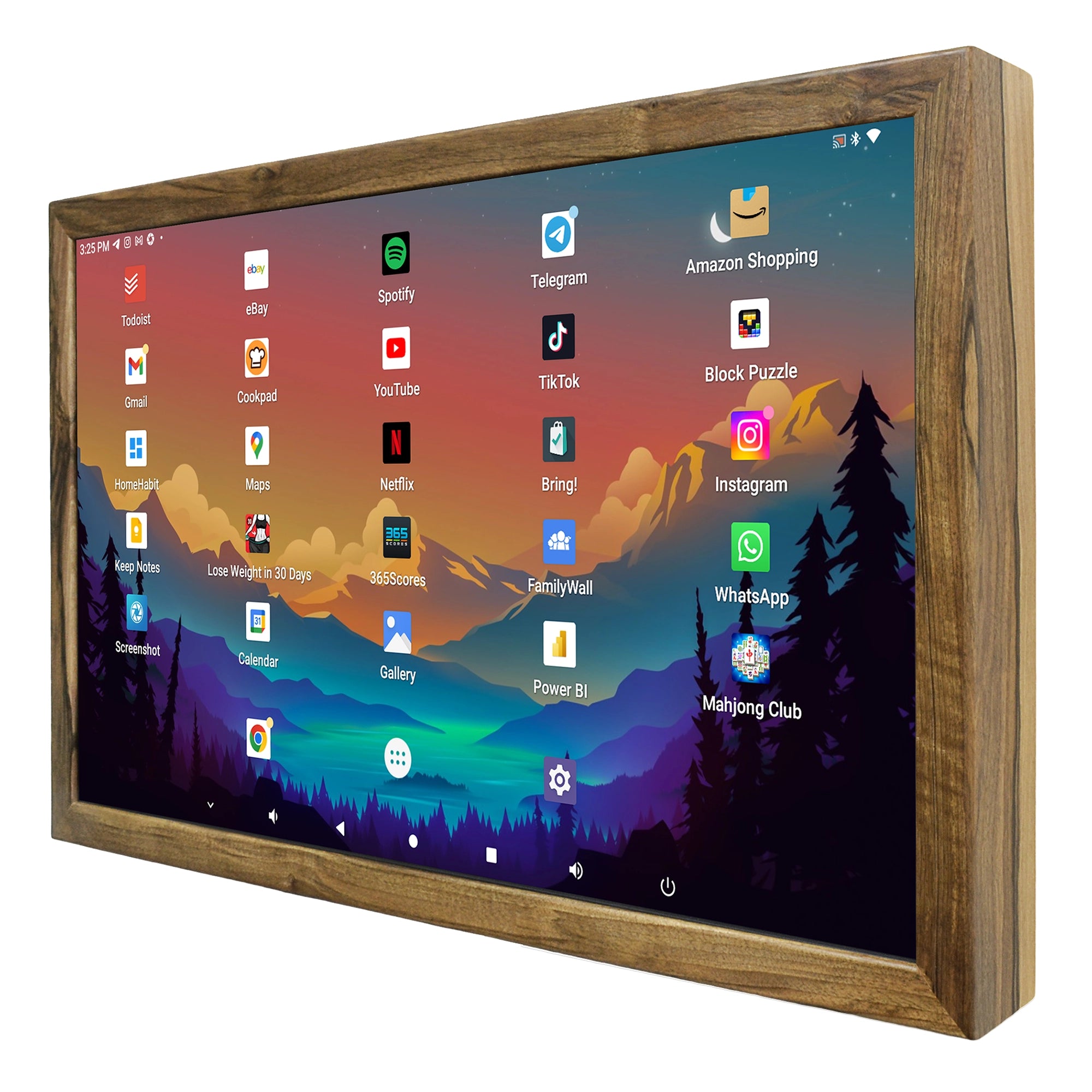
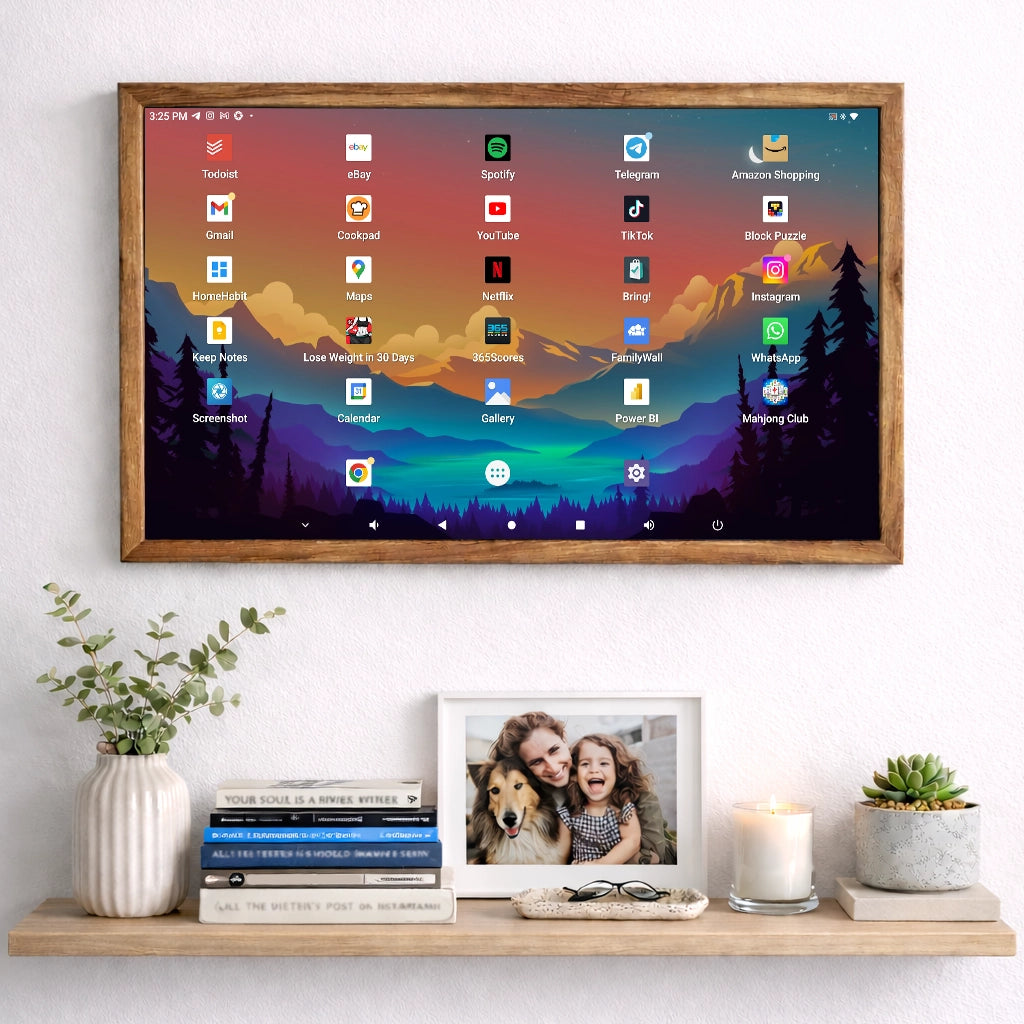
The first wave mostly consisted of repurposed consumer tablets:
- old iPads,
- cheap Android devices,
- Fire tablets mounted into walls,
- kiosk-mode browsers.
For hobbyists, this worked surprisingly well.
A $100 tablet running a Lovelace dashboard suddenly transformed the smart home experience. Family calendars became visible. Weather appeared near the entrance. Camera feeds lived permanently in hallways or kitchens.
But long-term weaknesses emerged quickly:
- batteries swelling from permanent charging,
- thermal issues,
- inconsistent wake behavior,
- unreliable kiosk modes,
- poor long-term Android support,
- consumer hardware not designed for 24/7 operation.
More importantly, most of these installations still looked temporary.
Like gadgets attached to walls, it is not an architecture. That distinction matters more than it initially seems. Because once a smart home becomes sufficiently integrated into daily life, users stop wanting “devices.” They start wanting architecture.
The Industry’s Strange Obsession With Small Screens
One of the more curious aspects of the current smart home market is how small most dedicated Home Assistant displays remain.
Products like the Shelly Wall Display XL represent a major improvement over improvised tablet installations. They integrate touch interfaces, sensors, speakers, relay controls, and cleaner wall integration into a purpose-built system.
From an engineering standpoint, they solve many problems correctly, e.g. with stable power, ow-profile mounting, integrated environmental sensors.
And yet, almost the entire category remains trapped between roughly 7 and 15 inches.
That limitation increasingly feels disconnected from what modern Home Assistant dashboards actually became.
A 10-inch panel works reasonably well if you need a single room controls or a scene activation. Can be also helpful with your home's thermostat adjustments or quick sensors interactions.
But modern dashboards increasingly contain:
- whole-home floorplans,
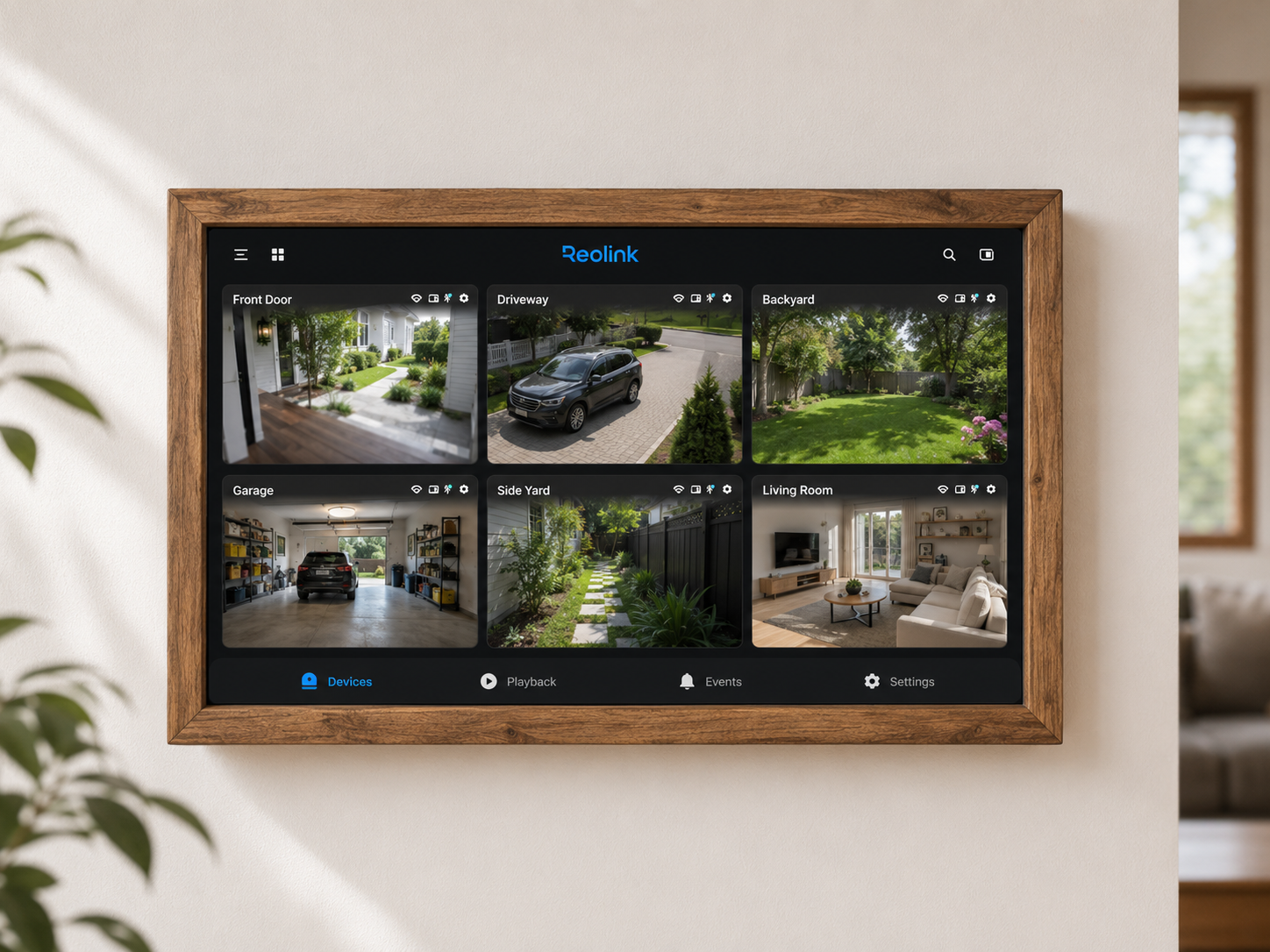
- multi-camera layouts,
- solar production analytics,
- HVAC telemetry,
- battery storage behavior,
- historical energy charts,
- indoor air quality trends,
- AI-generated summaries,
- occupancy heatmaps,
- dynamic pricing forecasts.
At that point, screen size stops being cosmetic, it becomes functional.
Home Assistant Dashboards Are Becoming Observability Systems
Something important is happening inside advanced smart homes that the consumer electronics industry still seems to underestimate.
Homes are becoming observable systems. That may sound abstract, but the implications are enormous.
Five years ago, most homeowners rarely thought about:
- real-time electricity pricing,
- particulate matter concentration,
- HVAC efficiency curves,
- humidity-driven mold prevention,
- solar self-consumption ratios,
- overnight EV charging optimization,
- occupancy-based climate zoning.
Now many do.
Especially among technically inclined homeowners. And once people begin monitoring systems continuously, they start wanting persistent visualization.
As operational complexity increases, dashboards grow larger, not smaller. There is a reason network operations centers do not use 8-inch displays. Visibility scales with complexity.
The smart home industry spent years trying to minimize visible interfaces. But increasingly sophisticated residential automation is pushing in the opposite direction:
toward larger, shared, always-visible information surfaces.
The Return of the Wall
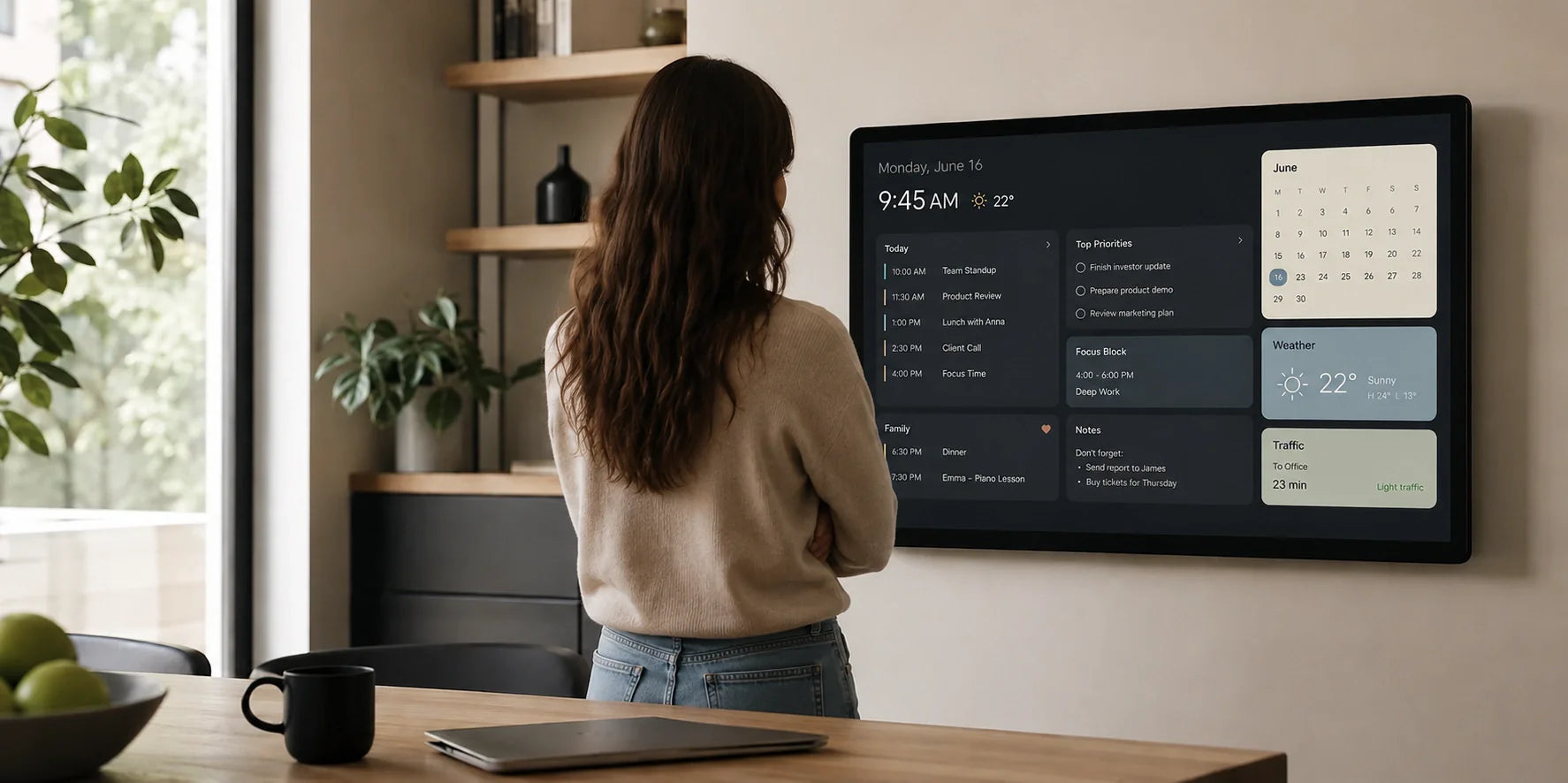
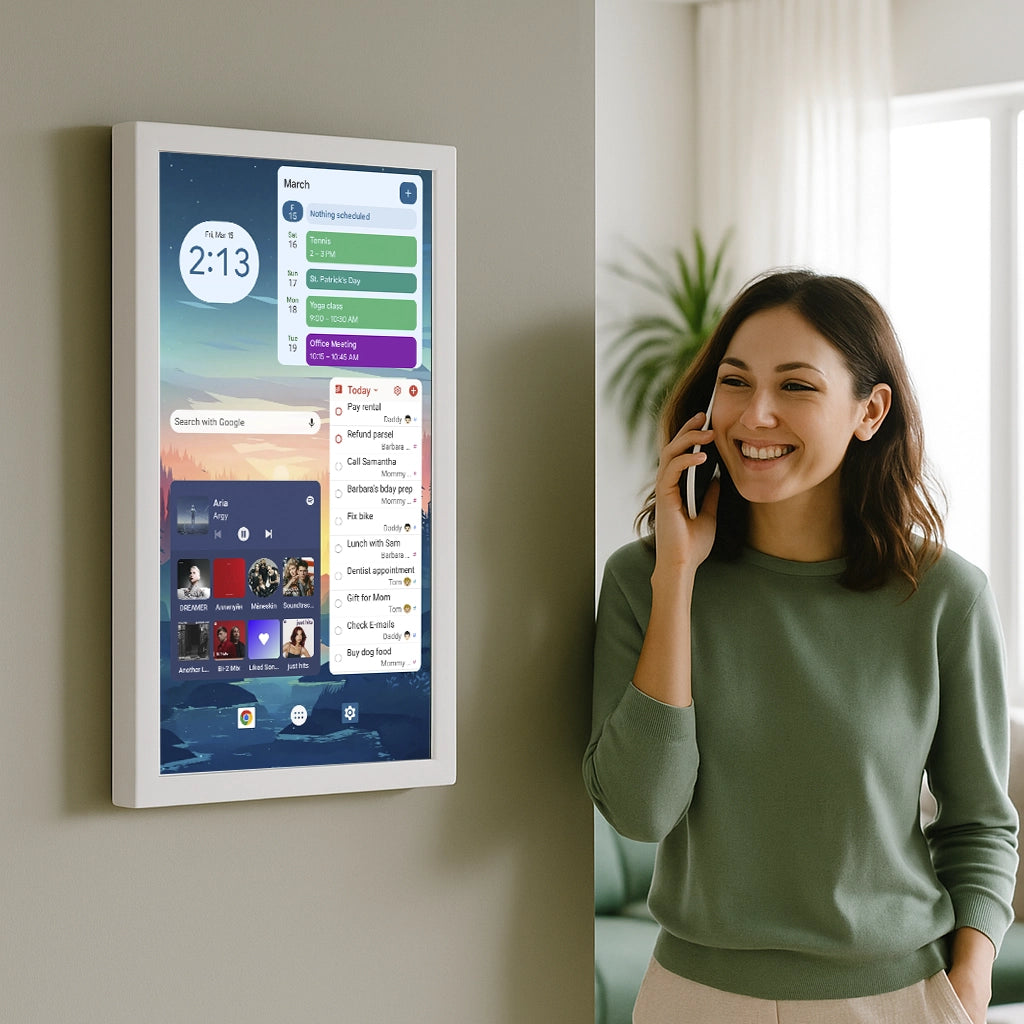
This is where the conversation becomes less about gadgets and more about architecture. A wall-mounted Home Assistant display behaves differently from a phone. People glance at it passively while moving through the home.
Children check tomorrow’s schedule while eating breakfast.
Parents notice rising indoor CO₂ levels during winter.
Someone sees that electricity prices will spike at 6 PM.
A security camera thumbnail reveals a package delivery before the notification arrives.
The information becomes ambient. That changes behavior. And perhaps surprisingly, this is where many current smart home displays still feel undersized. Small panels work as controls.
Larger panels become environmental awareness systems.
What is the SmartnMagic Approach?
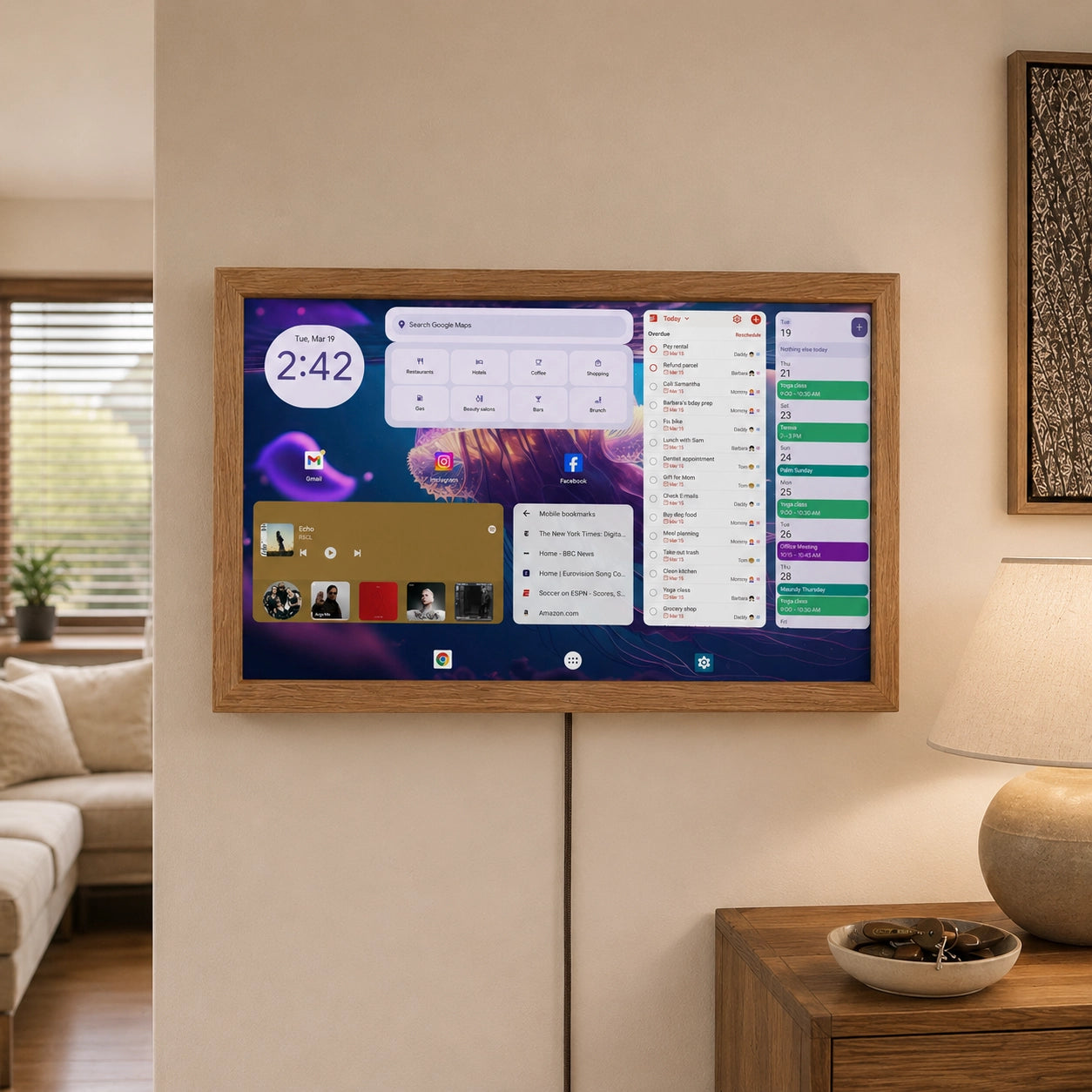
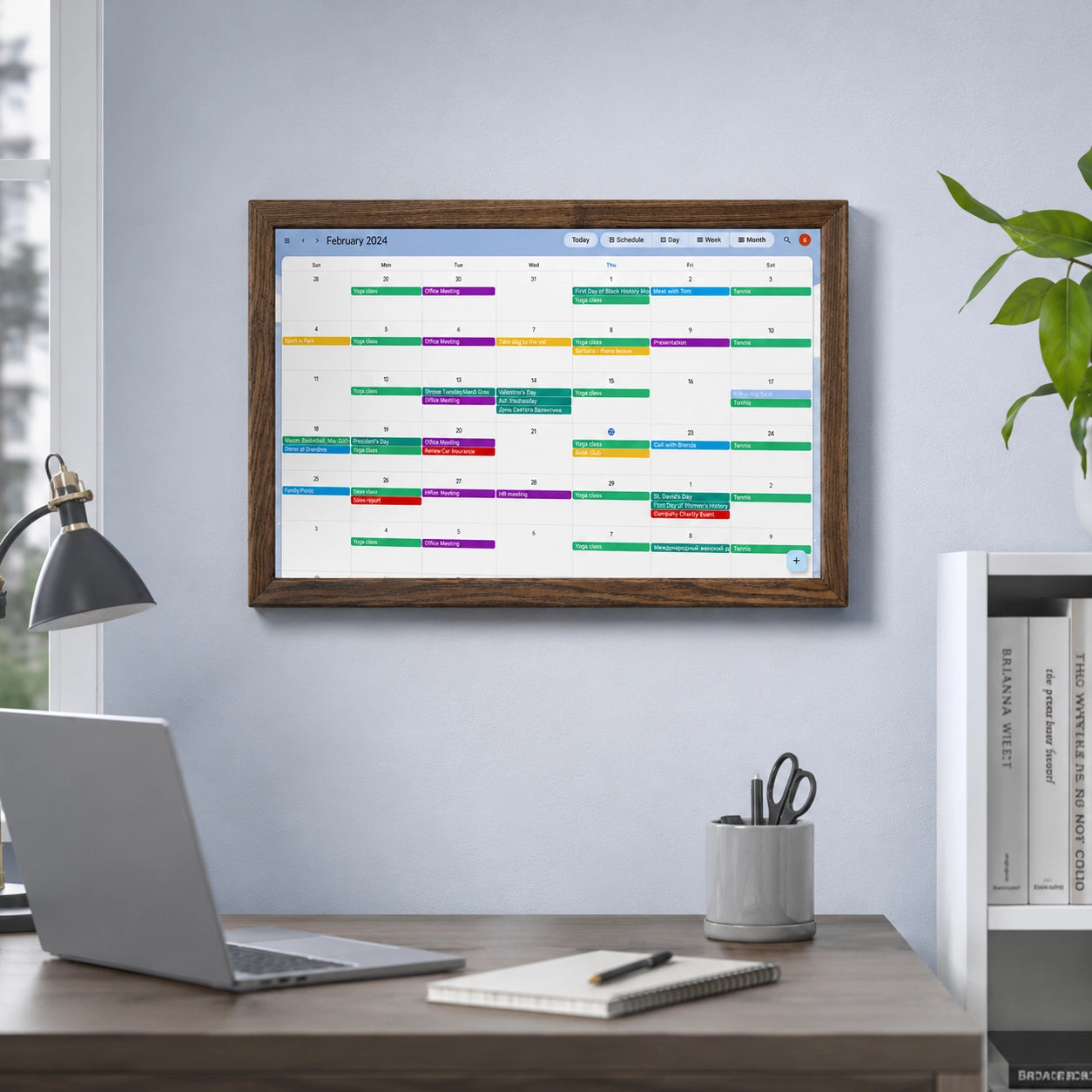
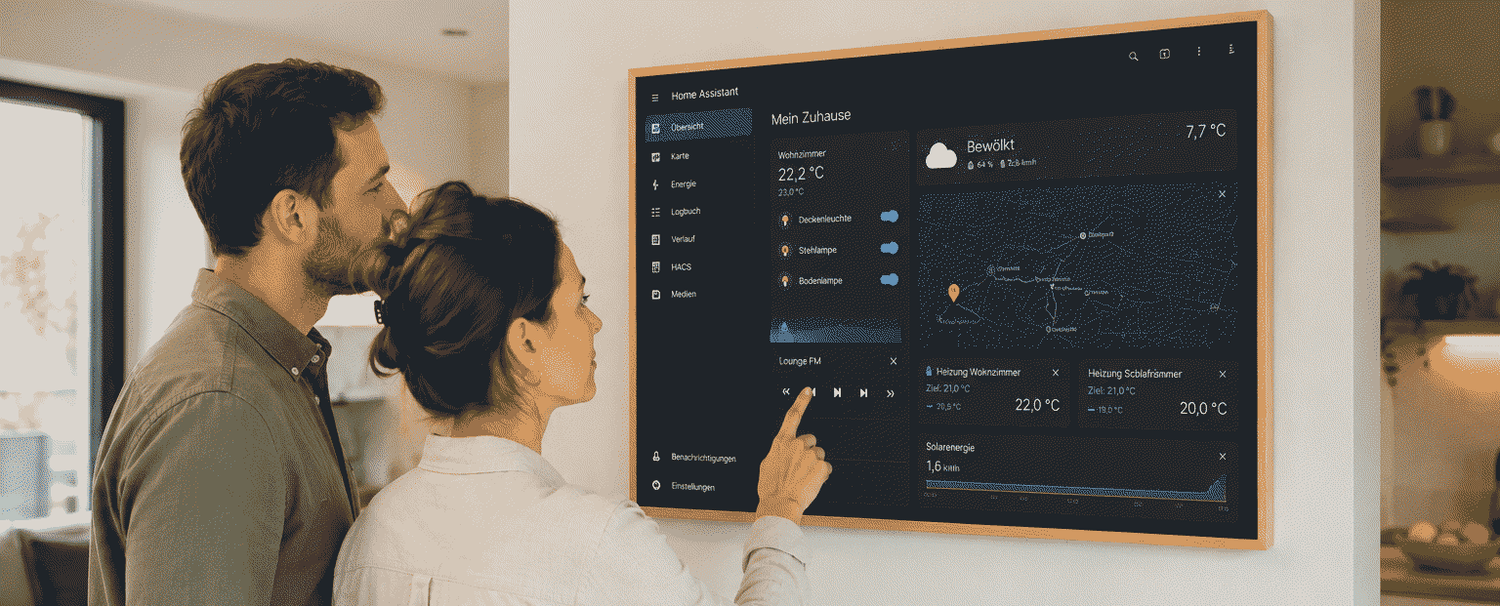
That distinction helps explain why the SmartnMagic 24-inch Home Assistant Display Server All-in-One stands out in the current market.
Most Home Assistant display products today still assume the display is secondary infrastructure connected to another hidden system elsewhere. The SmartnMagic concept approaches the problem differently. Instead of separating compute and dashboard it merges them into a single wall-mounted appliance.
Why it matters?
First: it simplifies deployment dramatically
Traditional Home Assistant setups often involve:
- separate power supplies,
- network topology considerations,
- hidden compute hardware,
- thermal management,
- cable routing,
- maintenance fragmentation.
For enthusiasts, this complexity is acceptable. For broader adoption, it becomes friction. An integrated system behaves less like a DIY stack and more like a real appliance. The distinction sounds subtle but it is not. Historically, entire technology categories transition mainstream only after infrastructure complexity collapses into integrated products.
Second: 24 or 32 inches changes dashboard behavior entirely
Most smart home panels are designed around interaction. The SmartnMagic concept is designed around visibility. That difference is fundamental.
A 24-inch Home Assisstant display panel allows:
- simultaneous room telemetry,
- large energy visualizations,
- persistent floorplans,
- multi-camera monitoring,
- weather systems,
- family scheduling,
- environmental analytics,
- automation status visibility,
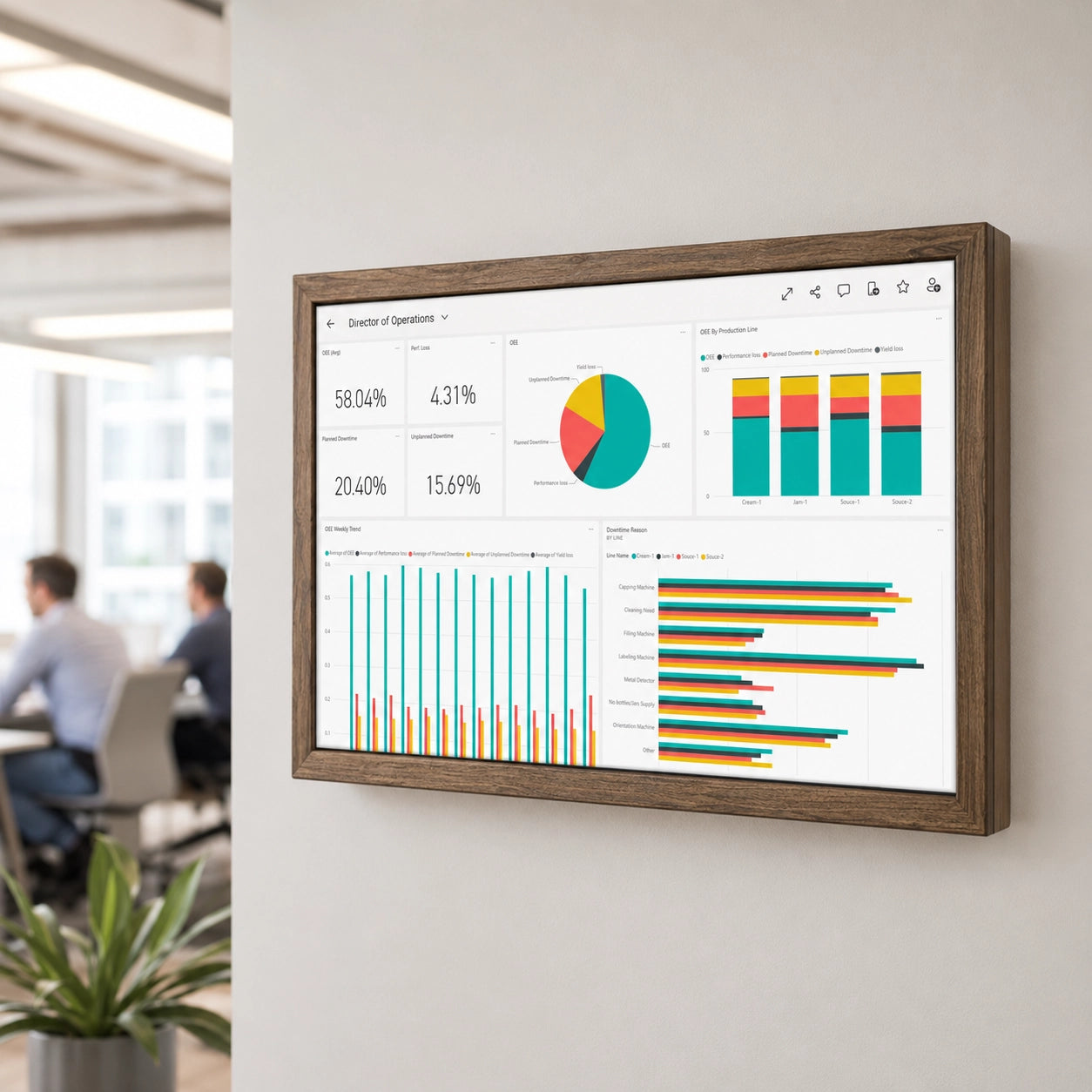
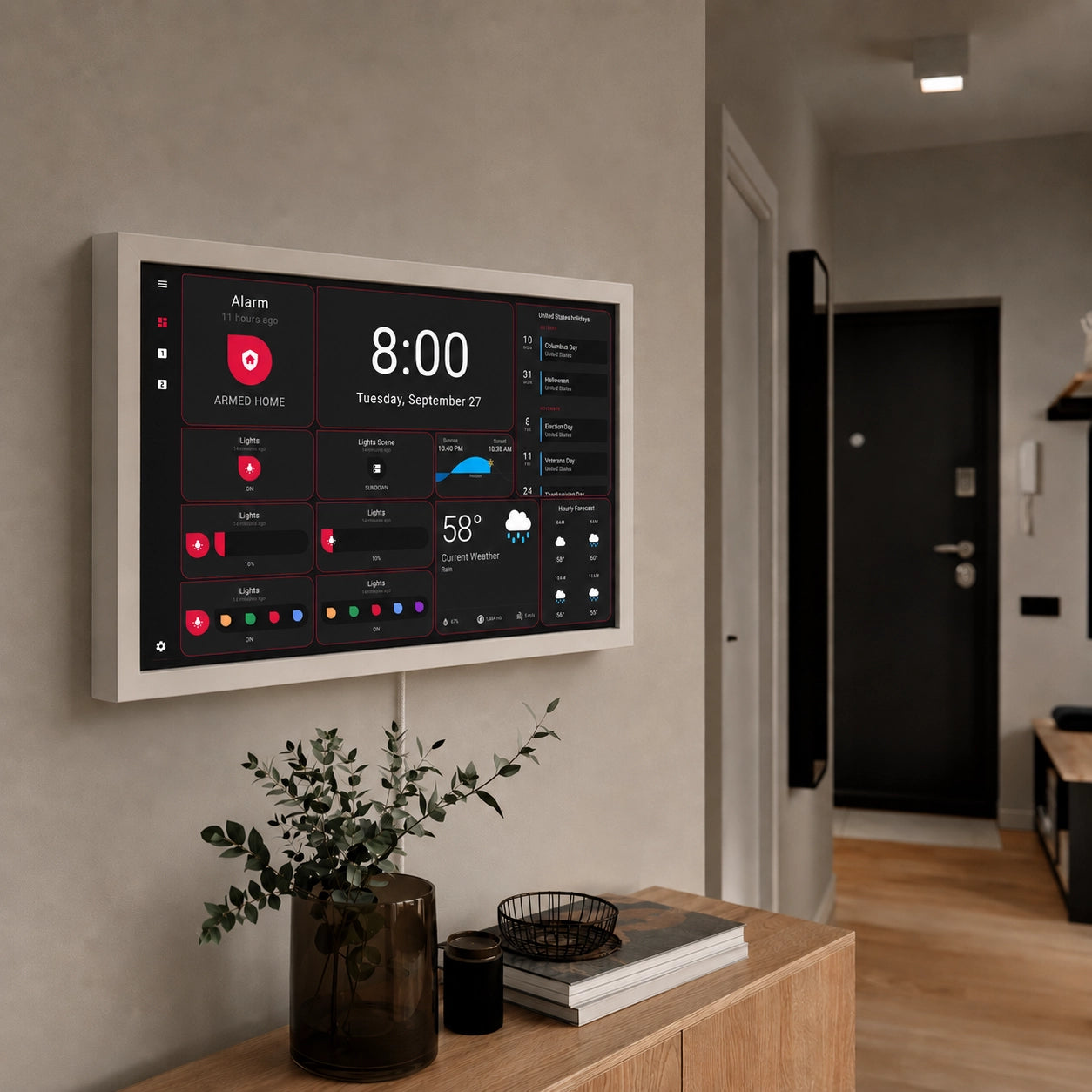
without constant navigation. The Home Assisstant dashboard stops behaving like an app. It starts behaving like operational infrastructure. In many ways, the concept resembles miniature building management systems used in commercial environments — except adapted for residential life.
Integrating the Home Assistant Server directly into a wall-mounted 24" or 32" display transforms the automation system from a background IT service into a permanently accessible physical interface for the entire home. Unlike traditional architectures with a separate server, tablet, and network-dependent communication between them, a unified hardware platform reduces interface latency, eliminates common kiosk-mode and mDNS/discovery issues, minimizes WebSocket connection interruptions, and removes dependency on personal mobile devices.
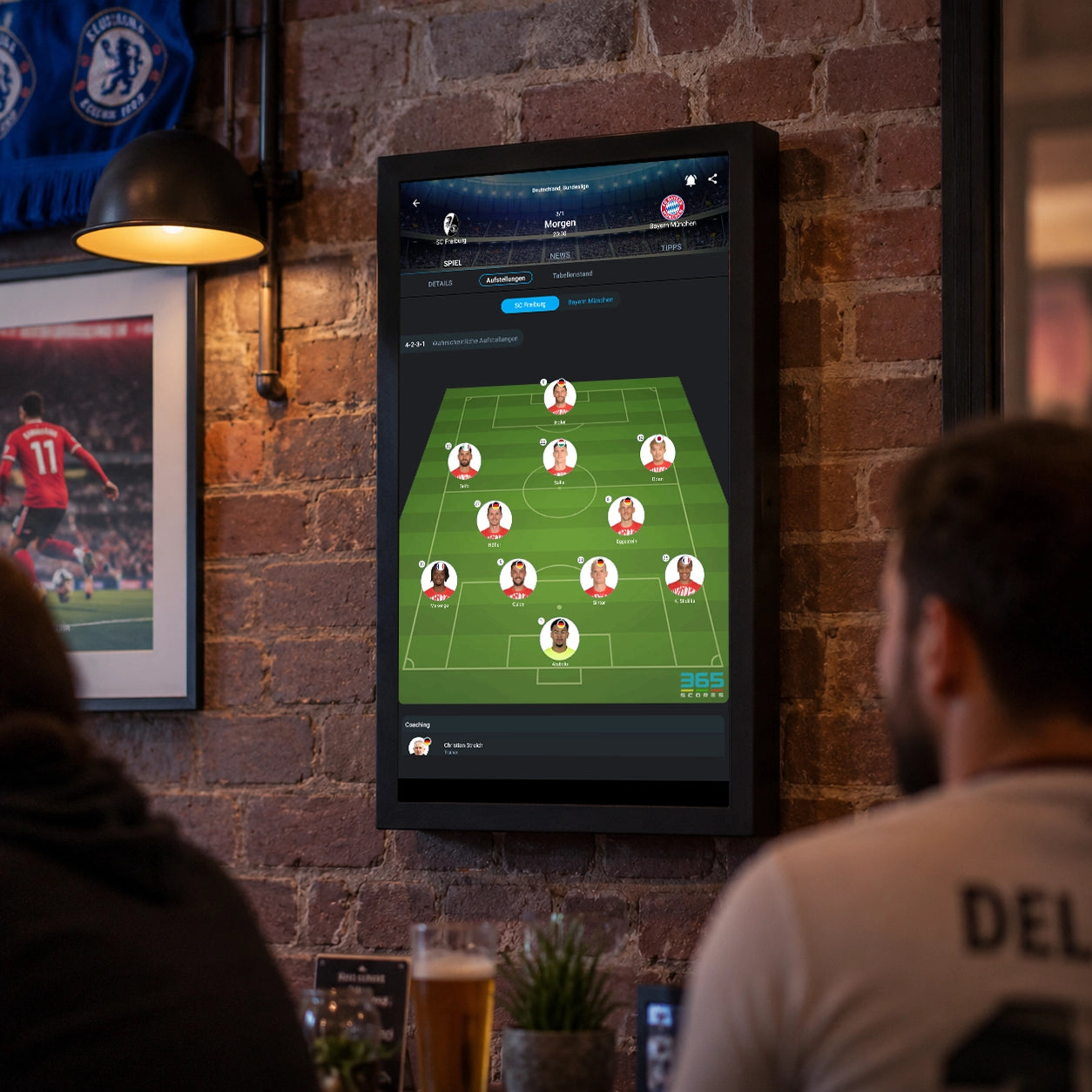
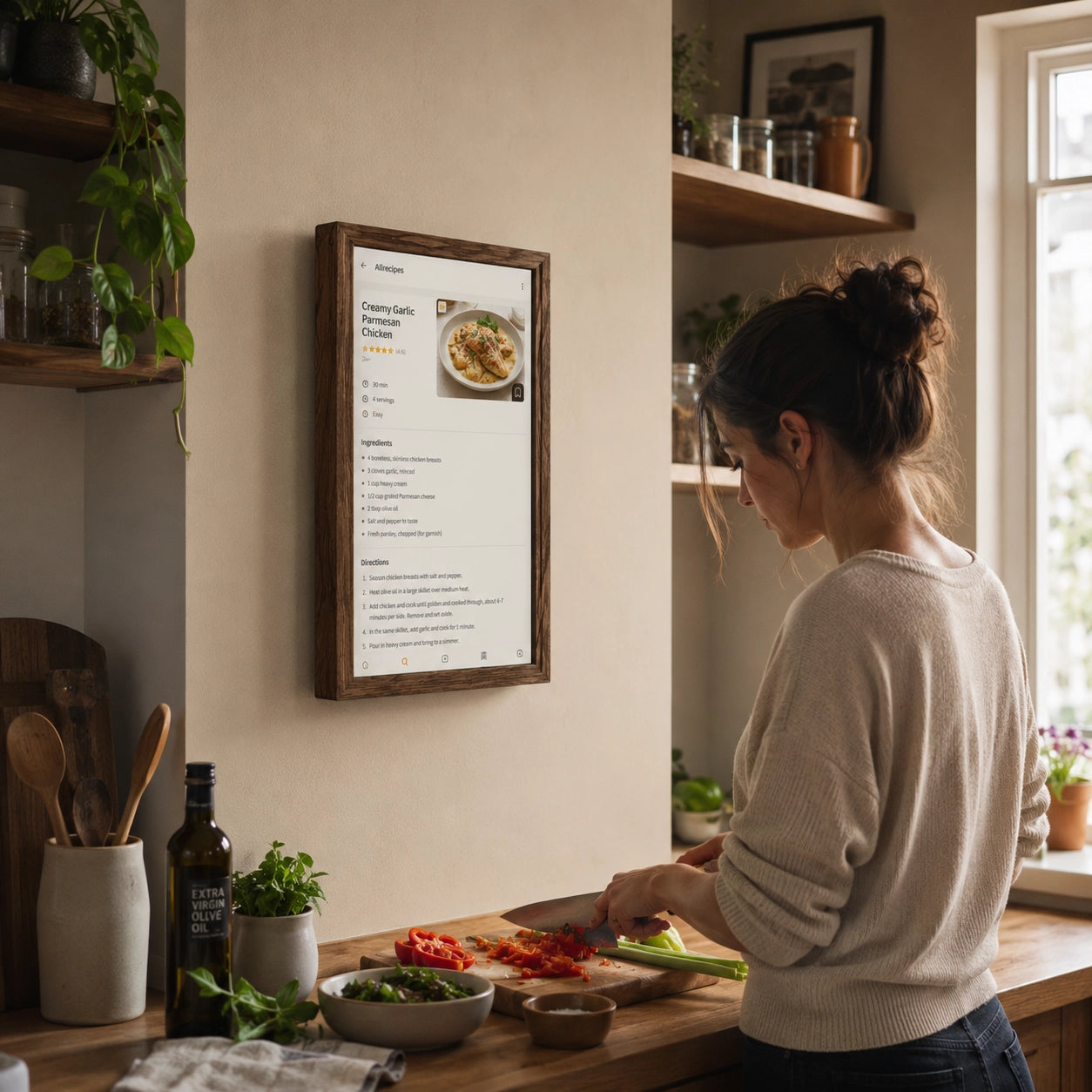
The large 24" and especially 32" display sizes provide a fundamentally different user experience compared to typical 7–10" smart panels: cameras, climate controls, energy consumption, calendars, room status, alarms, and telemetry can be displayed simultaneously without constant screen switching. In practice, the device operates as a dedicated smart home terminal with an always-visible interface rather than as an application that users open temporarily.
The wall-mounted form factor also ensures permanent accessibility for all family members, significantly increasing real-world interaction with the Home Assistant ecosystem compared to mobile-only usage scenarios.
The ePaper Countermovement
At the same time, another interesting movement emerged at the opposite extreme:
ultra-minimal ePaper displays.
ESPHome-powered ePaper dashboards became popular because they solve a different problem beautifully.
An Electronic paper display behaves almost like digital paper:
- always visible,
- low distraction,
- extremely power efficient,
- readable in sunlight,
- operational for weeks on battery power.
These displays work exceptionally well for:
- weather,
- calendars,
- room status,
- air quality,
- schedules,
- passive telemetry.
But they are not command centers. They are ambient information objects. And their popularity actually reinforces the same underlying trend:
people increasingly want smart home information embedded physically into the environment itself. Not hidden inside phones.
Visualization still matters. Humans remain visual creatures. The more complex homes become, the more visual context users need.
Smart Homes Are Quietly Becoming Infrastructure
The most important shift happening right now may not be technological. Smart homes are slowly transitioning from “gadgets people own” into infrastructure people live inside. That changes expectations entirely.
As Home Assistant continues evolving into a residential operating layer, its interfaces are likely to evolve similarly:
away from temporary consumer electronics,
and toward permanent environmental systems.
That transition is still early.
The market remains fragmented. Most displays are still small. Many installations still rely on modified tablets. Large-format dedicated Home Assistant displays remain surprisingly rare. But the direction is becoming visible. The wall itself is starting to become the interface. And perhaps that was always inevitable.
Because once homes become intelligent enough to generate meaningful awareness, people eventually want that awareness to exist physically around them.
Not hidden in pockets, but embedded directly into the architecture of everyday life.